Le Provençal

A love story in a bottle.
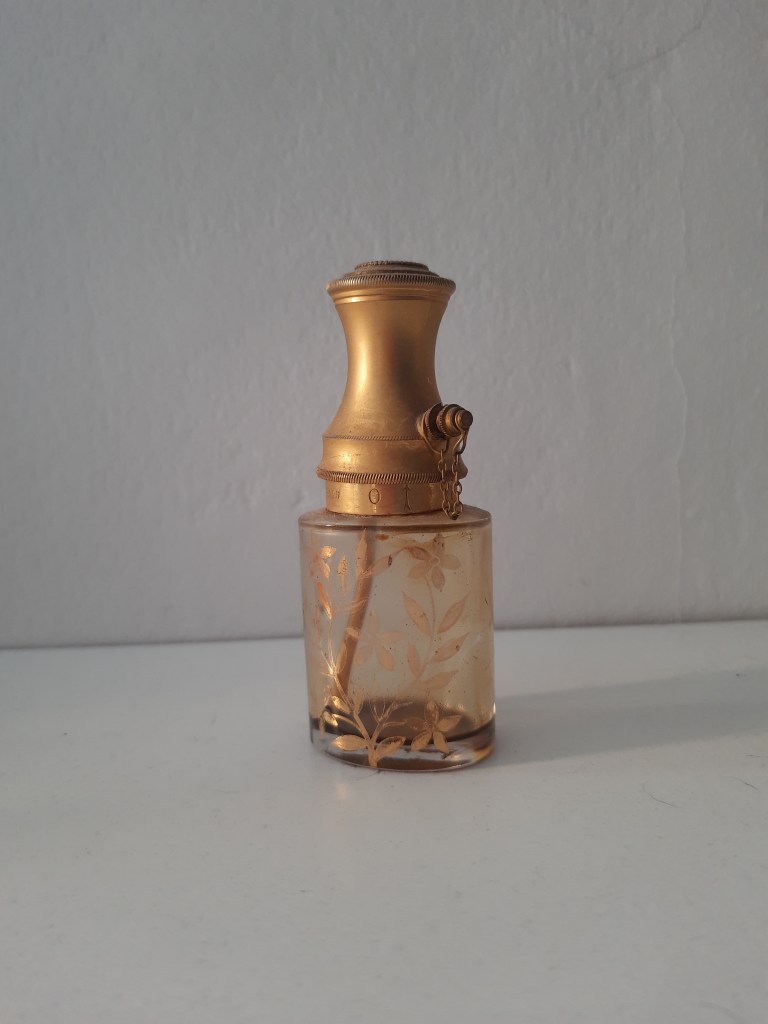
Vintage glass perfume bottle with gold floral decoration and ornate brass cap

“Your home is like a museum!” Gemma writes to me when I lend her my place for a while.

It’s true. Looking around at so many objects now, my apartment fills with a chorus of voices, each shouting over the other to tell its story—some long forgotten, others still vivid.

One soft, elegant voice stands apart. It draws me in precisely because it doesn’t scream like the rest. A small glass bottle, about four inches tall, catches my eye. It is hand-painted with golden leaves and flowers, topped with a brassy cap shaped like a fire hydrant. Instantly, I see my mother’s vanity table, where this tiny treasure rested from my childhood until her death in 2003.

Le Provençal – Molinard, reads the label on the cap, whose threads have been broken for years. I lift it. Like Aladdin’s genie, the perfume escapes from the dark brown residue clinging to the bottom of the bottle. Even after so many decades, it hasn’t lost its elegance or charm. My mother’s essence, I think.

No. 48 – Jeune – Grasse is printed near the base. Yes, she had been young back then, on those holidays in the South of France. Young and beautiful. I can see the lavender fields, the wild horses of the Camargue, the Roman ruins of Arles, and the bridge of Avignon. I hear my mother’s rich voice singing, “Sur le pont d’Avignon, on y danse…” and the buzz of the mosquitoes inside our tent—the ones that ate only my father and me alive. I see her eyes sparkling as she sampled the fragrances at the oldest perfume factory in France. And I remember her sheer delight when my father gave her that solid perfume sample set and this little bottle.

He loved her so very much.
Born of Frosty Soil

My grandmother´s tale

What a bitter irony! February 1950, and for the first time since the end of that terrible war, the whole family is gathered together—only for it to be at Father’s funeral.

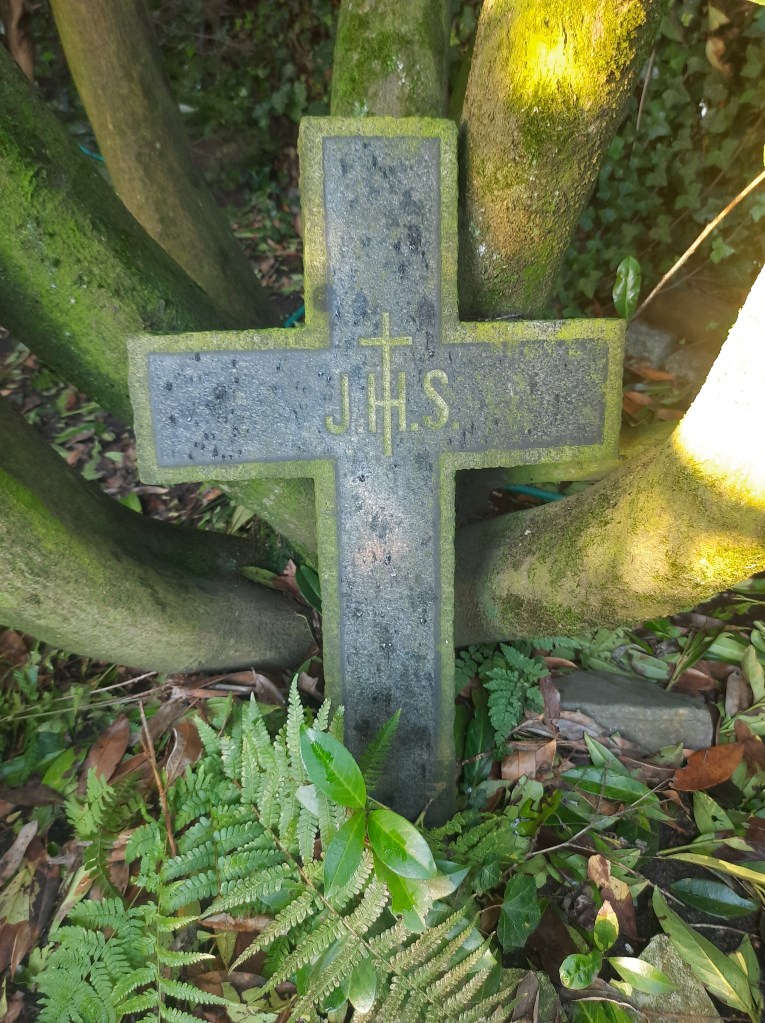
Weathered stone cross marked JHS among moss-covered tree roots and ferns

Through a veil of tears, I watch my daughter. Back straight, she steps slowly toward the open grave. Even now, when sorrow should mellow her frozen expression, not a single muscle twitches on her face of ice. Only the sharp, abrupt movement with which she hurls the white rose into the pit, and the tears streaming down her cheeks, betray the storm raging behind her composure. Her other hand rests over her swollen belly, cradling and shielding the child that will soon be born.

That gesture drags me back to the spring of 1917. I had run out of places to search for food. It broke my spirit to beg my family in the village for help.

“You considered yourself superior, choosing to abandon your backwater village for life in the rich city.” they threw in my face. “You should have stayed put. Too little, too late. Money can’t be eaten! Leave and don’t come back!”

Not a single rotten potato, nor a scrap of stale bread crust. I cried through the entire two-and-a-half-hour walk home, carrying a child nearly ready to enter the world. I wished for death right then and there. It is a miracle I didn’t miscarry on the shoulder of that road. I rested my freezing hands on my swollen belly. Still moving, I sighed, weary to my bones. Two months later Käthe arrived—a tiny, pale little worm without even the strength to cry. Another daughter. Another mouth to feed. My dry breasts had no milk to offer. The doctor wouldn’t even accept payment when, six months later, he diagnosed her with rickets.

Mourning her father

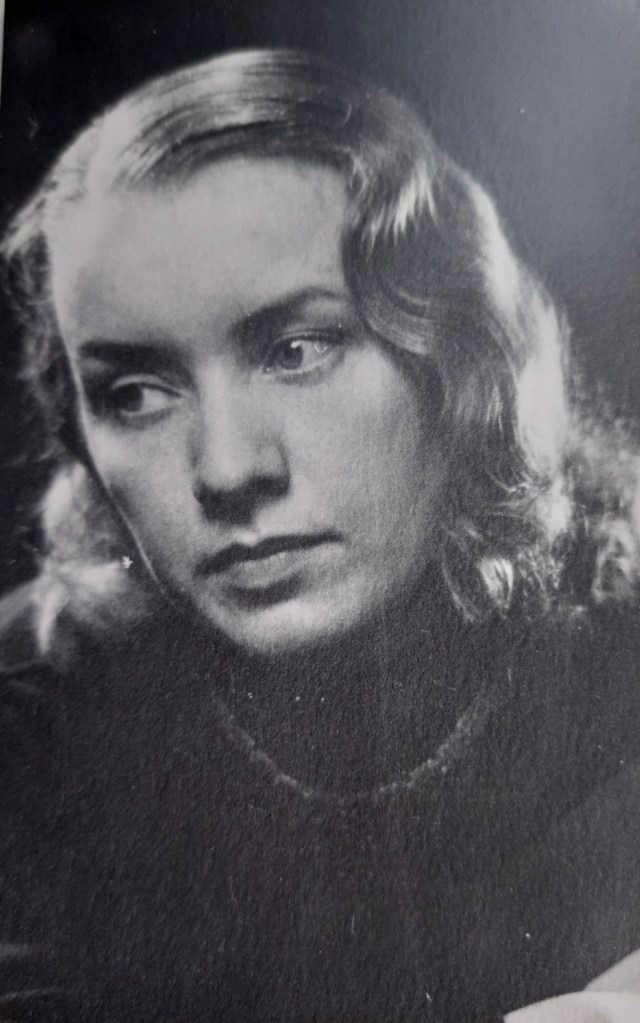
Yet how breathtaking that child, with her mismatched eyes, became! The caterpillar had transformed into a butterfly. Her sisters quickly learned she was as delicate as thin ice and handled her with care—their ice princess. And look at her now: proud, elegant, gorgeous – and as cold as the spring in which she was born.

Speed dating

1940

One day, I complained to my mother that I had no idea how to find a boyfriend.
“Don’t worry, darling,” she said. “One day, he’ll just knock on your door.”

Yeah, right, I thought and grimaced.

Seeing the doubt on my face, she decided to tell me how she met my father.

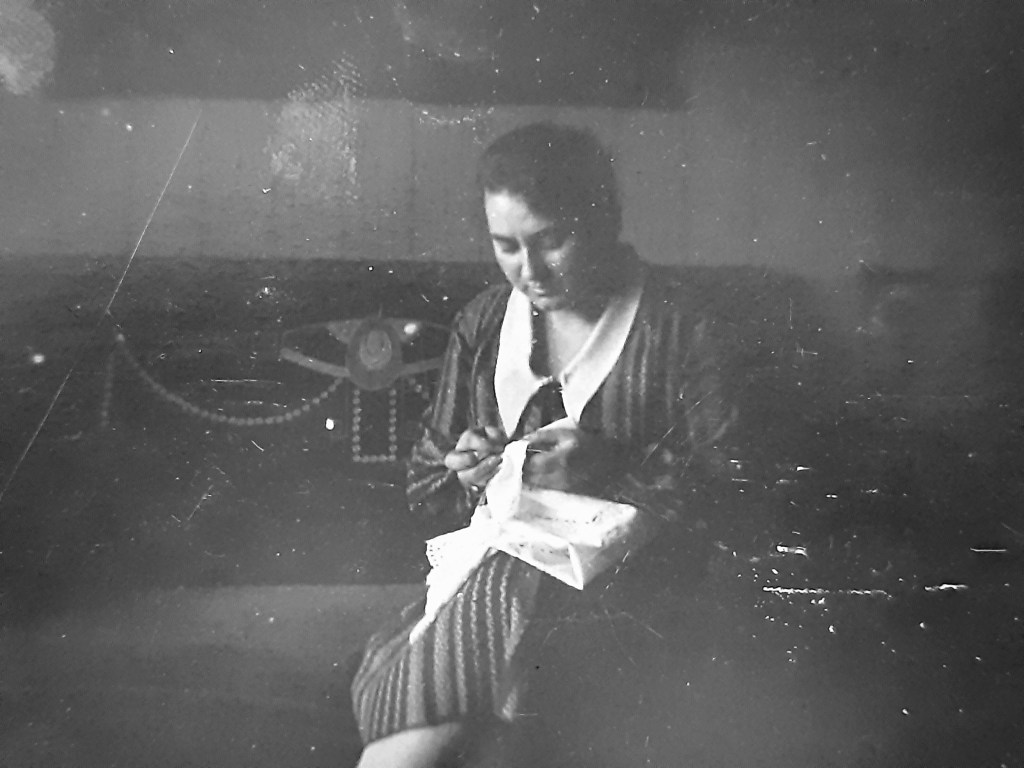
“It was the spring of 1939 in Berlin. I was sharing an apartment with my girlfriend Toni, who was studying textile design at university, and Ellen, a classmate of mine from fashion design school.That particular Saturday, it had poured with rain—typical April weather. On our way home, the three of us had been soaked to the bone. Now, a clothesline stretched across our living room, draped in a messy gallery of panties, bras, shirts, stockings, and dresses.Toni had just walked in and was in the bathroom washing her soiled clothes when the downstairs doorbell rang. I buzzed them in and listened to the heavy footsteps of two men climbing the stairs. It was eleven o’clock at night. Who on earth could that be at this hour? I wondered, checking to make sure the door’s safety chain was firmly in place. When they knocked on our door, I poked my head out, my hair wrapped in a towel after drying it. Standing there were two handsome young men—one in a trench coat and hat, the other in a leather jacket, both with their trousers drenched up to the knees. Small puddles were slowly forming around the tips of their closed umbrellas.

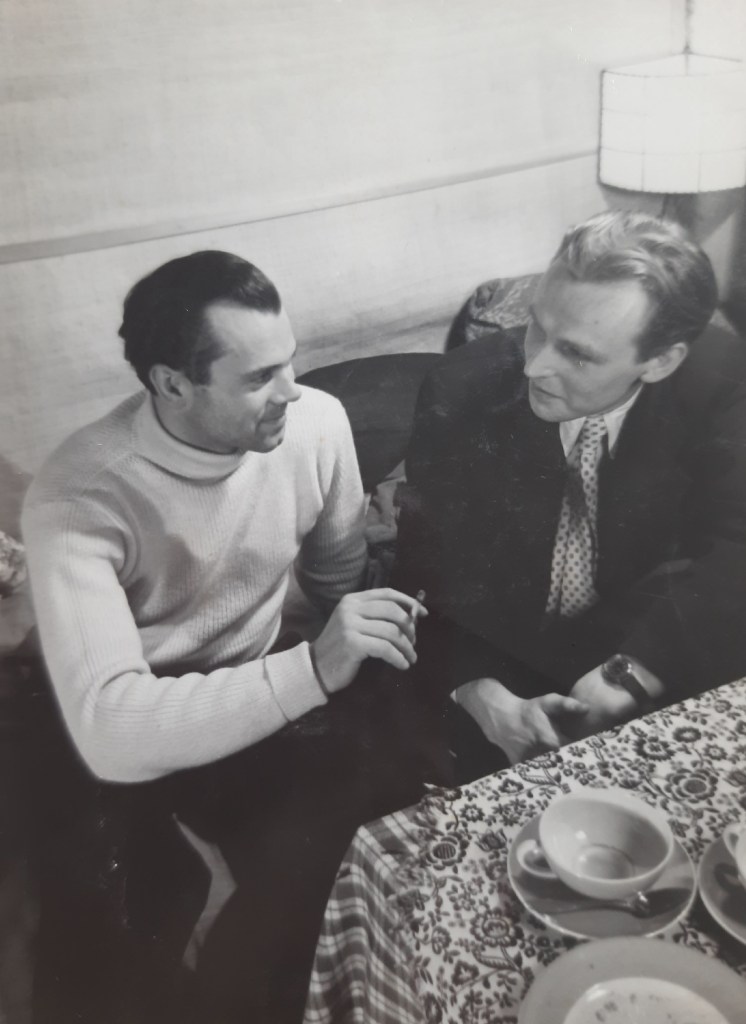
Black-and-white photograph of two men conversing at a dining table with teacups.
Koni and Fitz 1940

‘Does Miss Schneider live here?’ asked the tall blond one. ‘No, I’m sorry,’ I replied, preparing to shut the door. But then I noticed indignated that he had wedged his foot in the frame. ‘Could you please move your foot?’
‘Just a moment,’ said the one in the leather jacket. ‘I don’t understand. We just saw her come into this building, and she must have come up here, since this is the only apartment in the whole house with the lights on.’
‘That was my friend Lili Müller. Now please let me close the door and be on your way.’
‘What a shame. Our apologies, we must have made a mistake. We wanted to invite her and her friend out dancing. Would you ladies care to join us at the ballroom instead?’
‘No. It’s late, and the weather is terrible.’

The one in the leather jacket smiled at me.
‘How about tomorrow?’ He was handsome, I thought to myself. Why not? I caught sight of Lili peeking out from the bathroom door.
‘Lili, come here! These two guys are inviting us out dancing tomorrow. Do you feel like going?’
Lili looked at me, and I could see in her eyes that she loved the idea. And so, we made plans to go out the following evening with Koni and Fitz. Who would have guessed that a simple case of mistaken identity would end in two marriages, separated only by God many decades later?

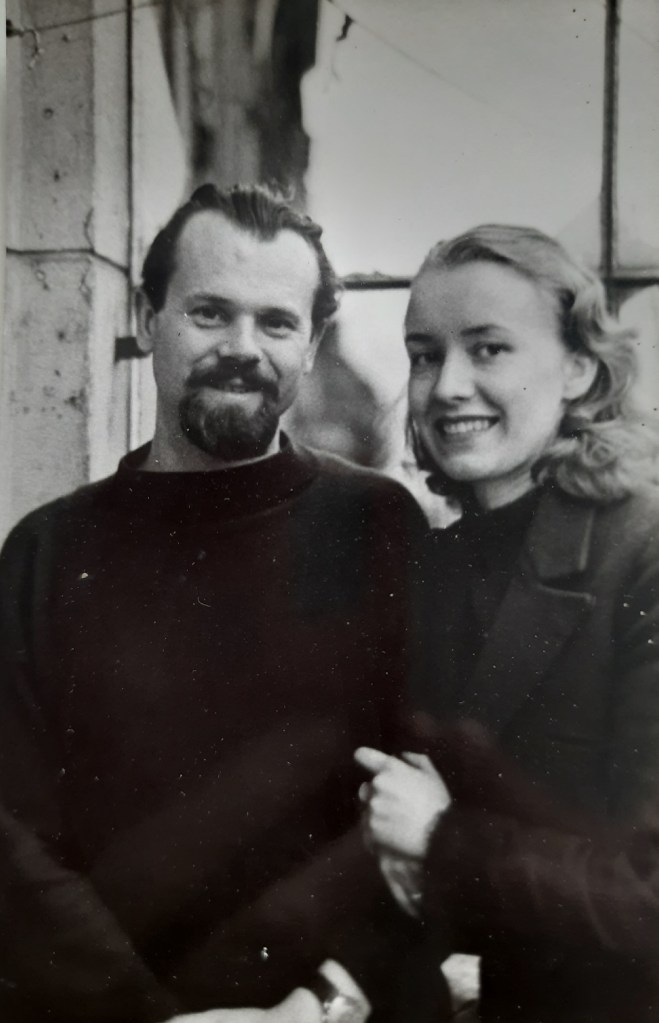
Black-and-white portrait of a smiling man and woman standing together indoors.
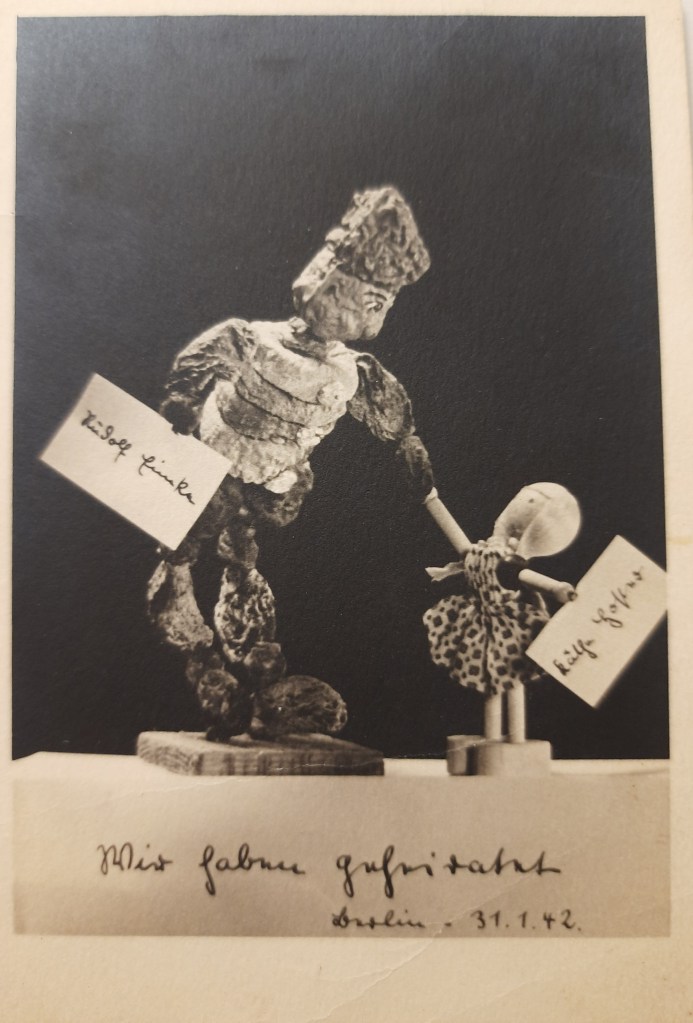
Katja und Koni at their wedding in Berlin 1942

Black-and-white photograph of a puppet performance featuring a costumed figure and a smaller seated figure with handwritten German labels.

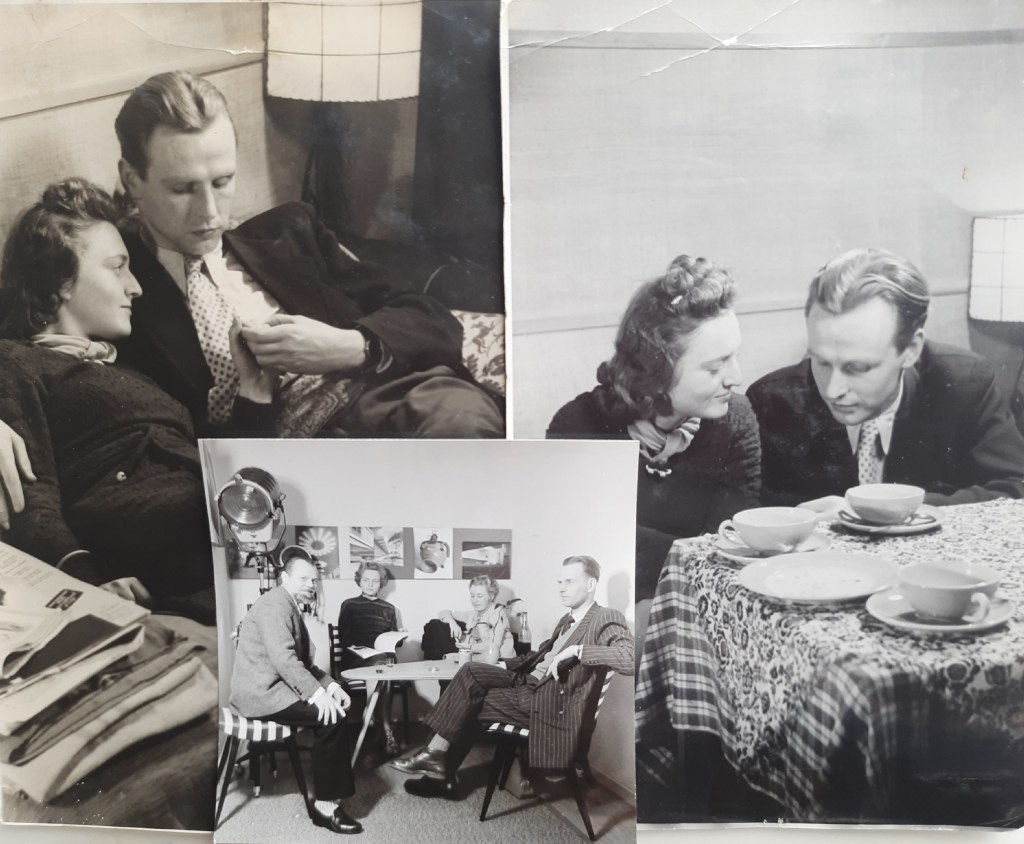
Collage of vintage black-and-white photographs showing a couple together and four people gathered around a table.
Lili and Fitz 1940 in Berlin and the two couples in the late 1950s at Koni’s Atelier in Düsseldorf

And eleven years after that night… you were born.”

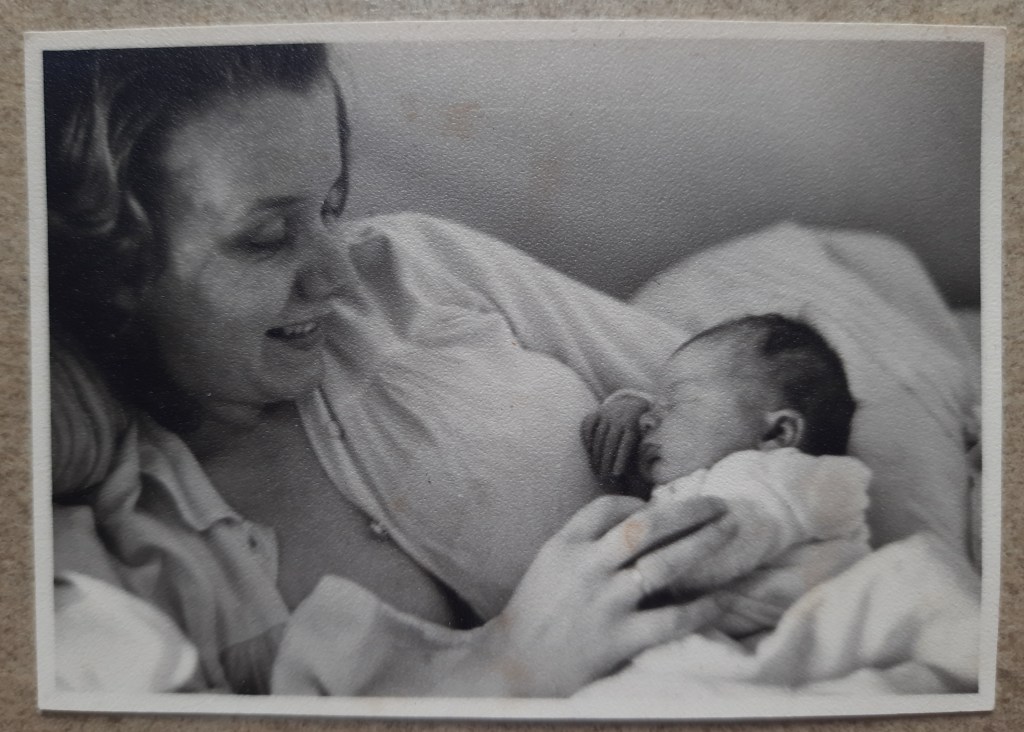
Black-and-white photo of a mother smiling at her newborn baby in bed

Eyes

I, too, have eyes—beautiful eyes!*

I am the daughter of a photographer. As a child, I never wanted to follow in my father’s footsteps because he lacked the patience to teach. Back then, I couldn’t see the world behind his eyes.

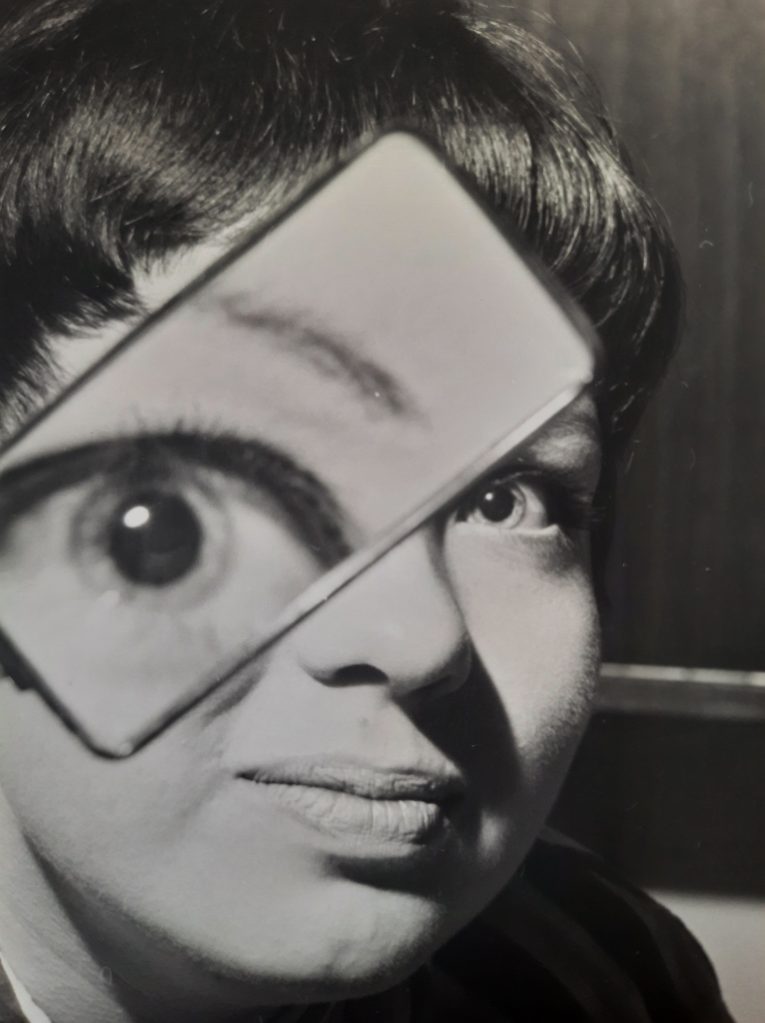
A black and white photograph of a person holding a mirror that reflects one of their eyes, creating an artistic visual effect.

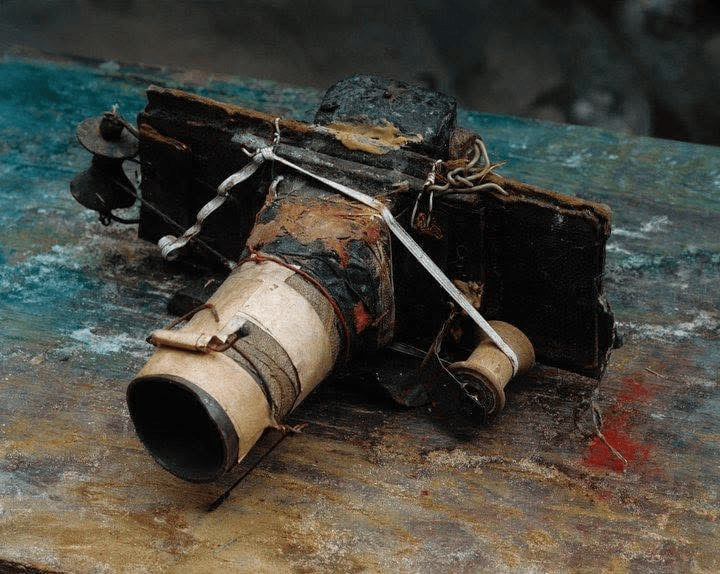
He was the son of an ambitious nation, born shortly before a devastating world war. When he was fourteen, the curious boy caught the wink of an optical lens in the trash. He fashioned his first camera and fell under the spell of the visual world—an encounter that would change his life forever.

Thirteen years later, then a young ballet dancer, he was drafted into service for a second world war. He decided he did not want to face the enemy with a weapon in his hand, but with a camera. He offered his services to the Wehrmacht as a photographer. From then on, he traveled to the theaters of war aboard a U-boat.

Whenever he surfaced from the breathtaking darkness of the deep waters into the liberating air of a coast, his third eye caught the cruel light illuminating horror and destruction. From the hostile cold of Scandinavia to the vibrant heat of Italy and the dry sun of Tripoli, he captured his impressions on rolls of celluloid.

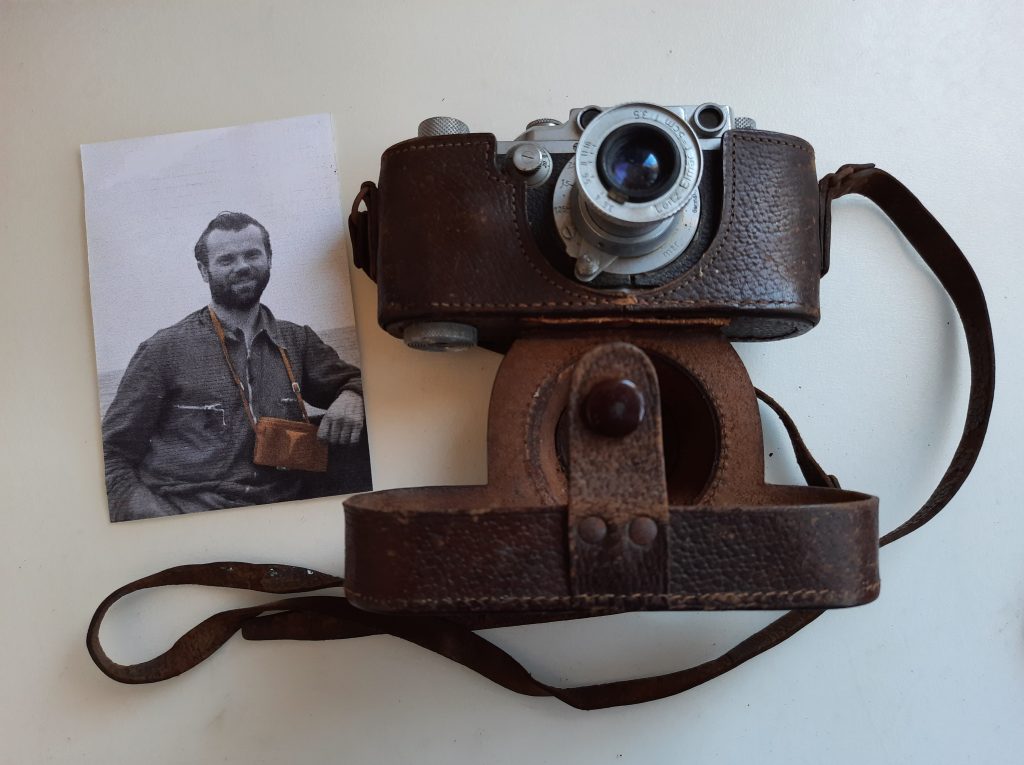
An antique camera with a leather case, positioned next to a black and white photograph of a smiling man wearing a camera around his neck.

While his camera recorded the terrible reality of battles on the front lines, the observer within him rejected those horrific images, choosing to remember only the beautiful pictures of adventures in foreign lands. From developing in the darkroom, the photographer knew darkness well. In the submarine, he had grown accustomed to the suffocating obscurity of the deep. When the war ended, the returning veteran set up his first studio in an underground bunker.

A ruined Germany licked its wounds. At forty, driven by curiosity, he photographed the windows of newly built homes like glittering eyes, the radiant eyes of newlyweds, and—with loving eyes—his wife and daughter. On photographic paper, he reproduced the world of his inner canvas, bearing witness to a new beginning and the rising and falling tides of his homeland.

Distant lands continued to lure the adventurer. Traveling the world, the curious Cyclops used his third eye to explore exotic vegetation, foreign cultures, and the people of distant shores. Later, having retired to a remote island, the old explorer upgraded his equipment, though his own failing eyes began to betray him. The lens of his camera became his way of navigating his surroundings.

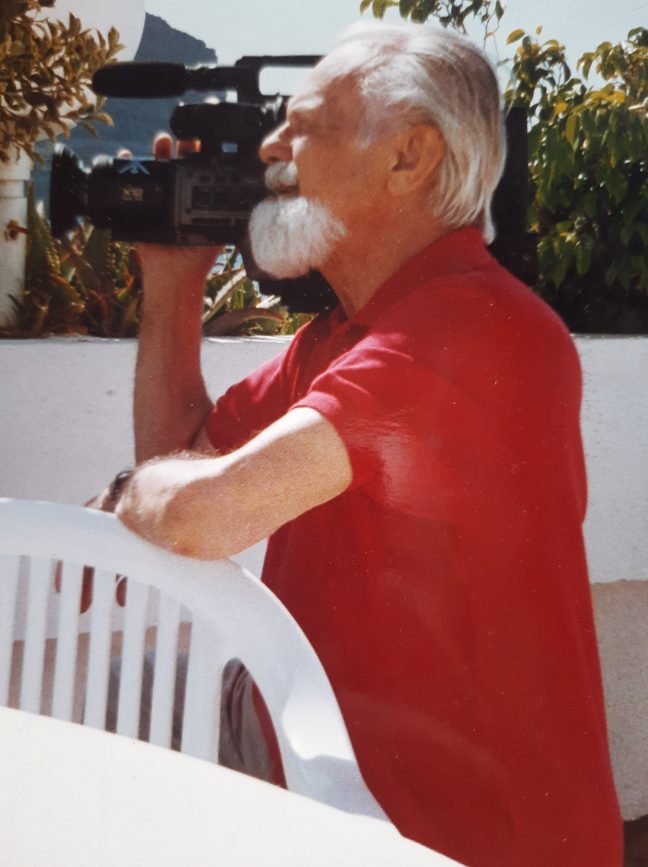
Koni Eimke with his video camera

When the light in his gaze finally went out, one half-blind eye remained open in a final stare. As I kissed him one last time, I realized that through his loving vision, he had taught me a love for life. In his photos, I see his perspective. Now that his lids are closed, I can finally see the world behind them.

* From ETA Hoffmann, The Sandman (1817)

The Zeiss Lens

Growing up in the Wreckage of War

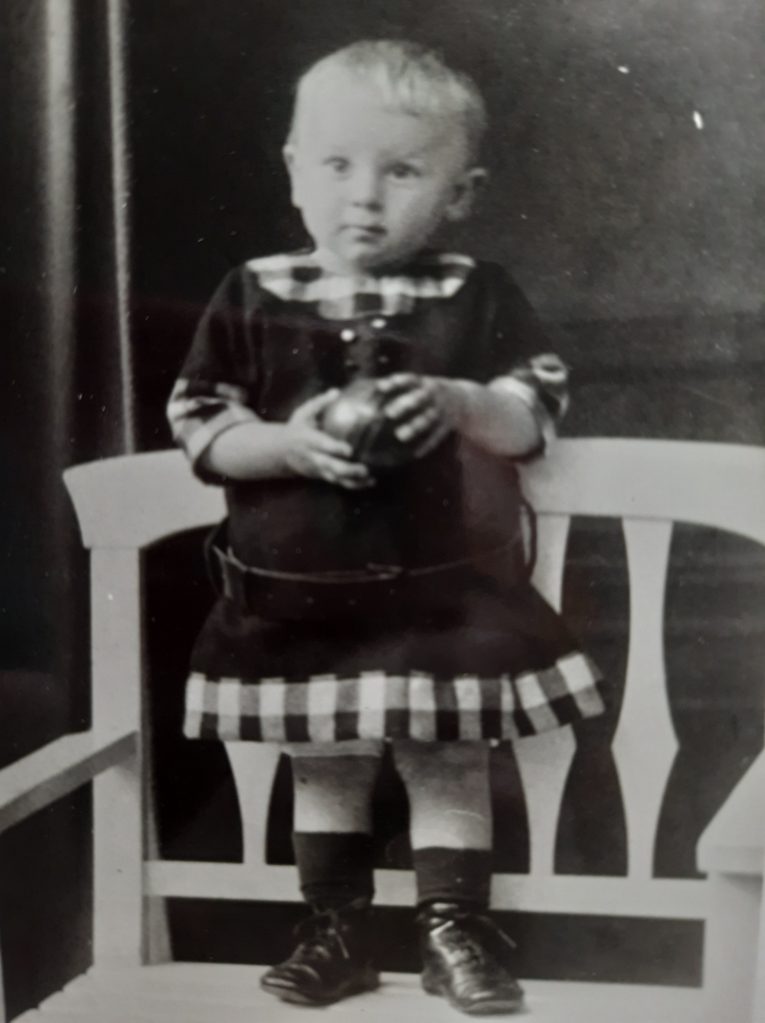
Little Rudi was chasing her around with a stool. He was three now. It was the second year of a world war, and food was scarce. Thank goodness, Frieda thought, that her milk was abundant. She unbuttoned her blouse, pulled out her breast, and, perched on the stool, the little boy began to nurse.

When the war ended, the surrounding ruins were a playground dream for the neighborhood kids. Frieda had forbidden him from going near them, but he was stubborn and wouldn’t listen. More than once, he came home with a bloody knee and torn clothes. She would have to mend them. The shops were bare, and money was tight.

By the time he was fourteen, Rudi and his friends were still exploring places where they hoped to unearth something interesting. From a pile of rubble, a Zeiss lens glinted in the trash. It was a treasure for the teenager.

“Mommy, Mommy!” he called out. “Look what I found! At school, they taught us about the camera obscura and a man named Daguerre. I’m going to build myself a camera!”

Foto: Roman Buxbaum – Tichý Ocean Foundation

Thank goodness he’s a good student and uses his time well, his mother thought. Aside from being rather messy, frequently ruining his clothes, and hating to wash up, he was a low-maintenance child. He’ll figure things out, Frieda reassured herself.

“What’s for lunch?” she heard him call from the stairs.

“Wipe your shoes before you come in!” she called back. Now it was her turn to chase him—not with a stool, but with a mop. He had left a trail of muddy footprints, and her husband could not stand a dirty house.

Ellen

Forty-two Years of Friendship

The day before, I had taken a monumental step: moving out of my parents’ home and into a place of my own. Today was all about gratitude—a chance to host the friends who had helped me move and thank them with a home-cooked meal. There was just one problem. My new flat came with a gas stove, and no matter how much I fumbled with it, I couldn’t get it to light. As the clock ticked down, panic began to set in. Desperate, I decided to seek help next door.

Our fifth-floor apartment was split down the middle by a shared hallway that housed a shower on one side, a bathtub on the other, and a toilet nestled between them. On either side sat a separate kitchen and bedroom. The girl who used to live on the right side had recently moved out, leaving the remaining tenant to choose her new neighbor. She had chosen me.

I crossed the threshold and tapped softly on the frosted glass of her door. Moments later, a silhouette glided toward the glass. The door swung open, and there stood Ellen—completely, unapologetically naked.

I just froze there, eyes wide, utterly speechless. Ellen took one look at my stunned face and burst into laughter. “I don’t even have a gas stove—just two electric hot plates,” she chuckled. Taking me by the hand, she walked me back across the hall to my kitchen. Together, we finally coaxed a flame from the burner.

The food was still simmering on the stove as the first visitor rang the doorbell. That wild, unexpected afternoon encounter marked the beginning of a forty-two-year friendship—one that endured until the day God did us part.

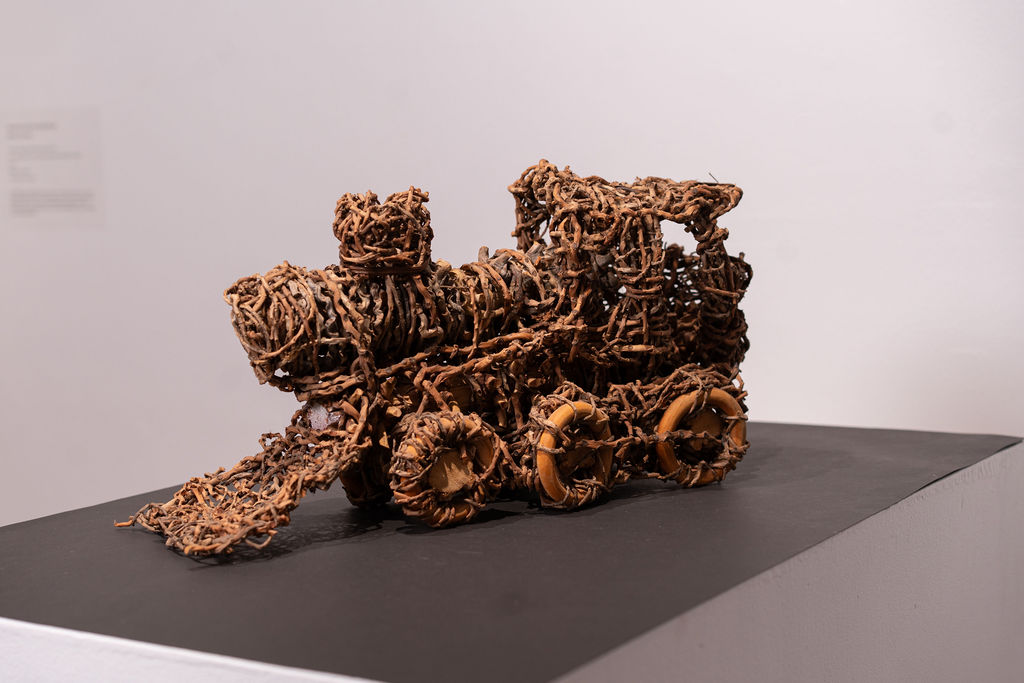
Janine McAullay-Bott, Train Engine, 2011, palm fronds, palm branch, kurrajong seed pod . Photo Josh Wells. Image supplied by MAC Inc.

Janine McAullay-Bott, Train Engine, 2011, palm fronds, palm branch, kurrajong seed pod . Photo Josh Wells. Image supplied by MAC Inc.

This morning, it felt as though her spirit were in the room with me. A photo popped up on my phone showing a tiny locomotive woven from twigs, and I knew instantly how much she would have adored it. She was an avid collector of toy trains and locomotives. Seeing it, I could almost picture her riding high atop that wooden train, her short hair tousled by the wind, laughing whole-heartedly—and, of course, stark naked.

I miss her dearly. She was the best friend I ever had.

The Pleasure of so many little Things

Tiny details of life in a world full of wonders

Rummaging through my drawer, a black cord keeps me from closing it. I tug on it, and tied to a carabiner hook covered in green rust, a black funnel-shaped object appears with a lens at its narrow end. Its Bakelite body is missing a small triangular chip where the lens screws in, and the lens itself is chipped too. “Darn it!” I hear my father say as he bends down to pick it up from the floor. It is his jeweler’s loupe, which he used to touch up tiny imperfections left by dust particles on photos using a fine brush dipped in black or white ink.

I remember a day during summer vacation. I had been given a microscope for my birthday. While running through my aunt’s garden, I scrapped my knee. I ran into the house, curious to look at my blood. It was teeming with round red particles that moved!

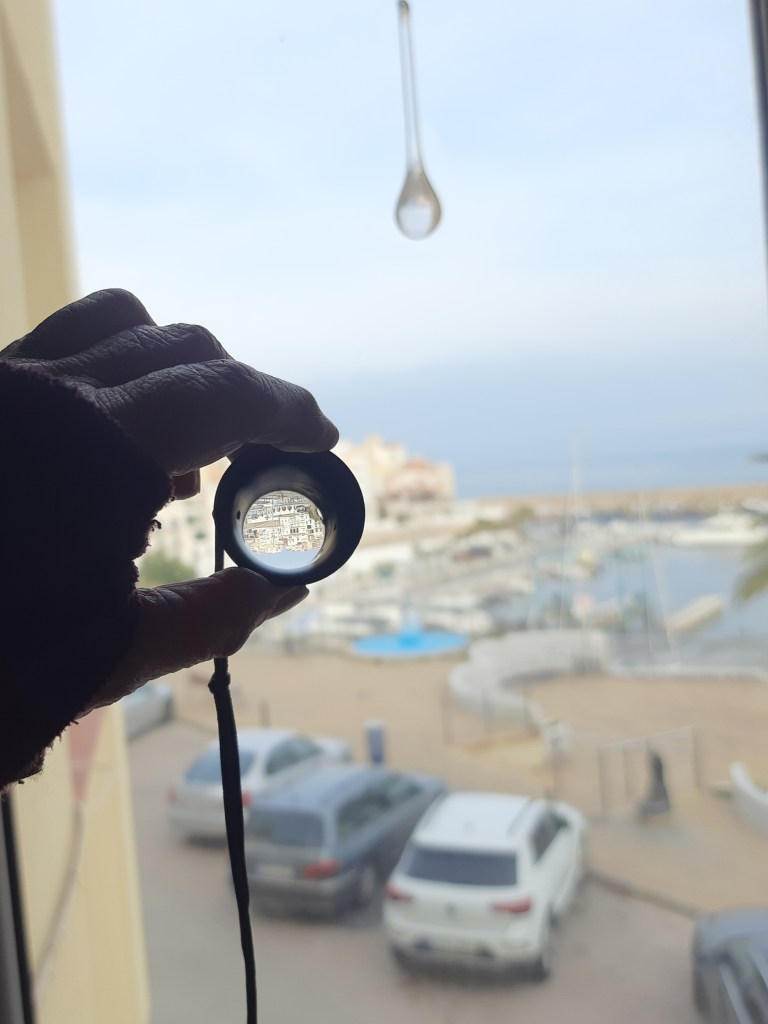
Better not look at the dust on my desk, just in case it moves too… I lift the loupe and try looking through it toward my window. I move it closer and farther from my eyes until the inverted, tiny image of my village appears. That is how it reduces. I flip it over. At two centimeters, it enlarges the minuscule print on an instruction manual. Closing one eye, I hold the loupe in the other. I can’t see a thing until the object is about ten centimeters away.

I look at my finger, magnificently magnified. I am amazed by the landscape of fingerprint ridges and grooves. Did you know that papillary ridges are dotted with countless tiny pitted specks? I get close to my dog’s blue eyes. Around the black pupil, I see feathery strokes of sky blue, encircled by a soft bluish-white ring laced with delicate veins.

I laugh quietly to myself. I have completely forgotten what I was looking for in the drawer. Standing here with my father’s loupe, I realize it doesn’t matter anymore. For a moment, I am not just looking through a lens; I am looking through my father’s eyes at a world full of wonders, sharing the exact curiosity that made him pause and pay attention to the tiniest details of life. Without knowing it, this was what I needed to find all along. 

Camino de Ronda

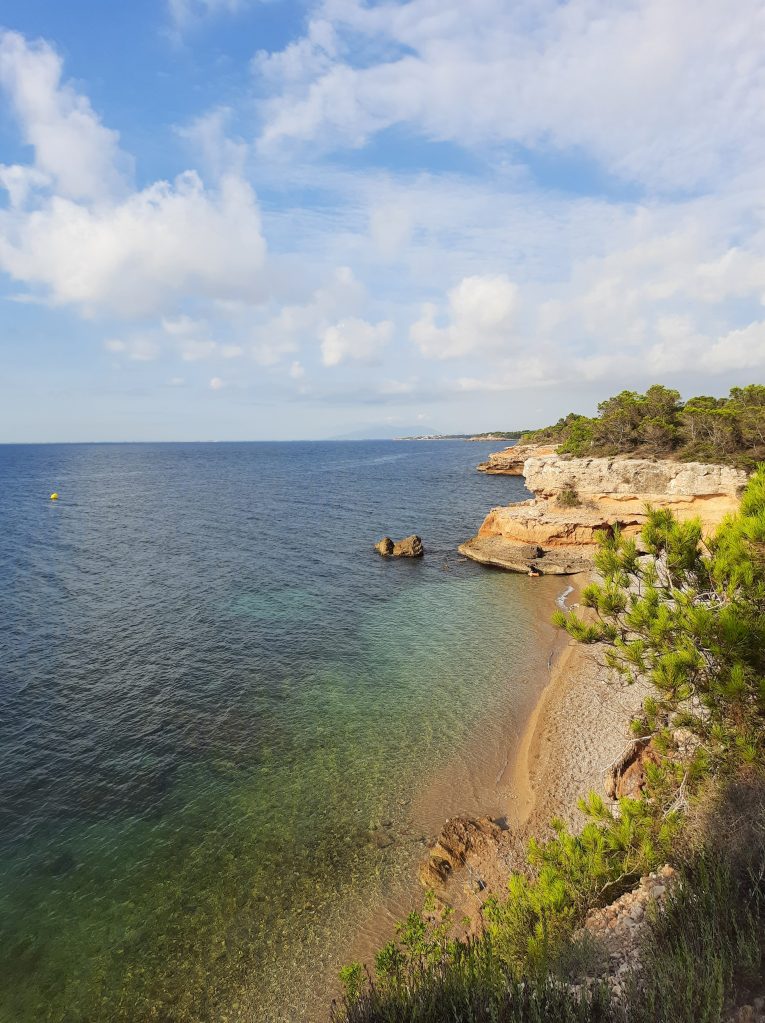
I walk with firm steps. I breathe deeply, absorbing the green exuberance as my feet tread on roots, fallen branches, and small pieces of calcified coral. In places, the ground is covered in soft green moss, slippery at times where cascading water has polished the surface. Downhill, downhill I go—carefully at first, but gaining speed until I am running. I feel the breeze of my own motion caressing my face.

This winding coastal path is my favorite section. My walk follows a map painted with scents: aromatic carpets of dry leaves, the perfume of pine, the fragrant offering of Mediterranean herbs, crisp green freshness, and the salty air from the Great Blue that embraces my town. I inhale deeply. Energy fills me. I feel calera.

The Sea is an Interior Monologue…

…and sometimes, my inner monologue is like the sea. In its calm blue, mysteries hide much like in the human psyche. They are difficult to wrest away. Sometimes they emerge on their own from the relentless ebb and flow. The sea is different every day. It is masculine and feminine. There are days when she looks like silver playing with the sun. When whipped by the wind, he grows angry, green as a cat’s eyes. I lose myself in the freedom of its infinite horizon. In the soothing murmur of its waves, I find a whole spectrum of ideas and thoughts, as deep as the sea itself. It speaks to me. Or is it I who speak to myself, stirred by it?

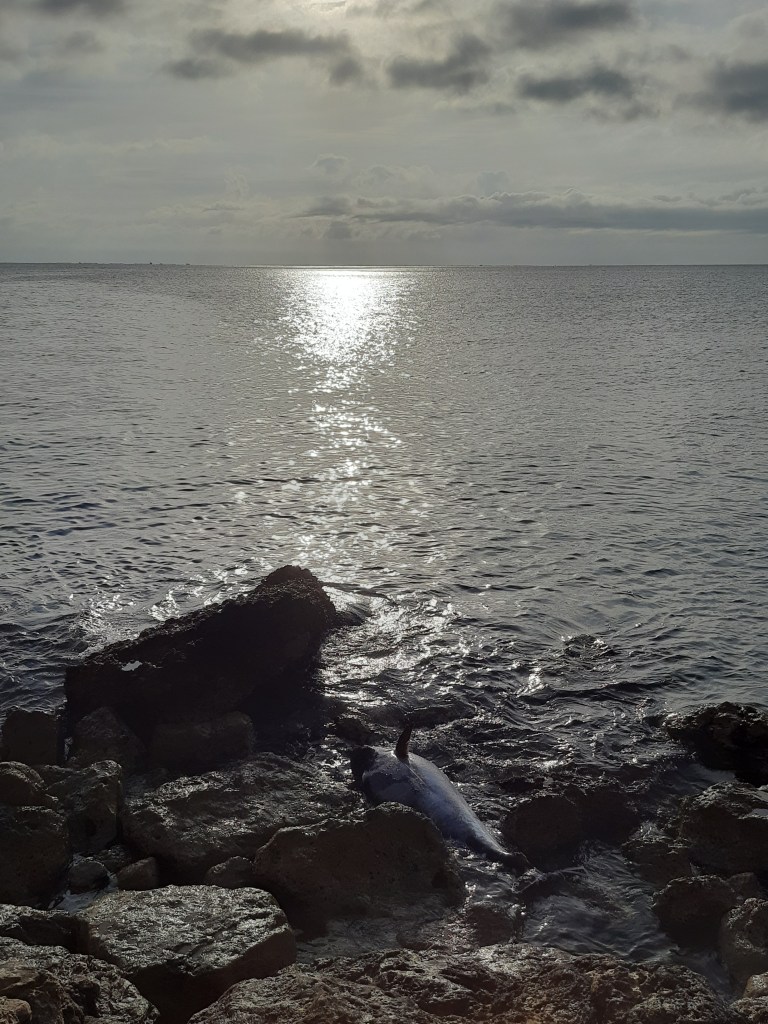
This morning, while walking my dog along the seashore, I found a tuna stranded among the rocks. I will never know what happened to it. I had often watched the large fishing boats hauling giant tuna from their deep bellies, lifted out of the fish farm enclosures. They transfer them to trucks that take them to the auction. Perhaps this one managed to escape its prison and died of hunger because, once free, it did not know how to feed itself. It was used to a daily diet of sardines, for which it sometimes fought with the other captive fish and the seagulls. Maybe it envied the seagulls their freedom of flight and decided to escape. Perhaps it injured itself during its getaway, which ultimately cost it its life. Or perhaps its time had simply come.

When this town cast a spell on me and I decided to stay, I had the impression it would be forever. This morning, I saw myself in the tuna’s place. We have both reached the end of the journey. It has died. I feel resurrected. Living by the sea is a present. And dying will be one, too.

Visions at Dawn

Come on, lazy bones, just get up! Go for a walk and enjoy the beauty of this new autumn day. In the dance of cool blue shadows, you can already sense winter drawing near. An aquamarine sky caresses its sapphire liquid lover, while in the distance, a lapis lazuli mountain range looks on, envying the beauty of their union. The blinding sun’s diamond reflections paint the palm fronds white. Let the still-mild air kiss the sleep from your eyes so you can witness the spectacle.

Because before you realize, darkness will descend. Like a black hole, the night will swallow the reddened dusk, wrapping you in the stillness of nothingness.