Ellen

Forty-two Years of Friendship

The day before, I had taken a monumental step: moving out of my parents’ home and into a place of my own. Today was all about gratitude—a chance to host the friends who had helped me move and thank them with a home-cooked meal. There was just one problem. My new flat came with a gas stove, and no matter how much I fumbled with it, I couldn’t get it to light. As the clock ticked down, panic began to set in. Desperate, I decided to seek help next door.

Our fifth-floor apartment was split down the middle by a shared hallway that housed a shower on one side, a bathtub on the other, and a toilet nestled between them. On either side sat a separate kitchen and bedroom. The girl who used to live on the right side had recently moved out, leaving the remaining tenant to choose her new neighbor. She had chosen me.

I crossed the threshold and tapped softly on the frosted glass of her door. Moments later, a silhouette glided toward the glass. The door swung open, and there stood Ellen—completely, unapologetically naked.

I just froze there, eyes wide, utterly speechless. Ellen took one look at my stunned face and burst into laughter. “I don’t even have a gas stove—just two electric hot plates,” she chuckled. Taking me by the hand, she walked me back across the hall to my kitchen. Together, we finally coaxed a flame from the burner.

The food was still simmering on the stove as the first visitor rang the doorbell. That wild, unexpected afternoon encounter marked the beginning of a forty-two-year friendship—one that endured until the day God did us part.
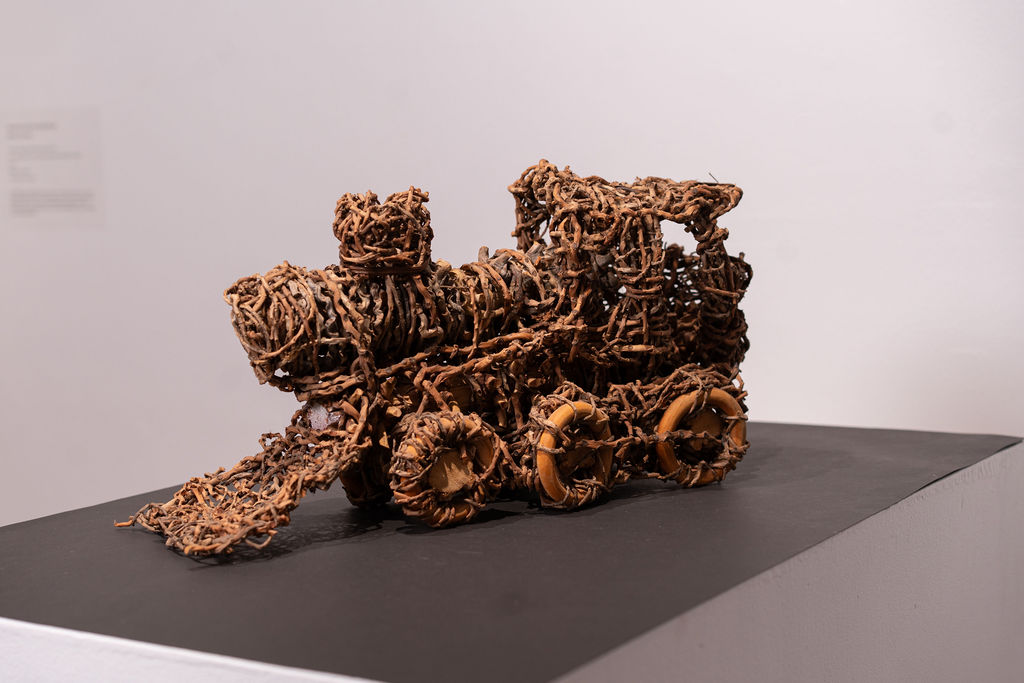
Janine McAullay-Bott, Train Engine, 2011, palm fronds, palm branch, kurrajong seed pod . Photo Josh Wells. Image supplied by MAC Inc.

Janine McAullay-Bott, Train Engine, 2011, palm fronds, palm branch, kurrajong seed pod . Photo Josh Wells. Image supplied by MAC Inc.

This morning, it felt as though her spirit were in the room with me. A photo popped up on my phone showing a tiny locomotive woven from twigs, and I knew instantly how much she would have adored it. She was an avid collector of toy trains and locomotives. Seeing it, I could almost picture her riding high atop that wooden train, her short hair tousled by the wind, laughing whole-heartedly—and, of course, stark naked.

I miss her dearly. She was the best friend I ever had.
The Pleasure of so many little Things

Tiny details of life in a world full of wonders

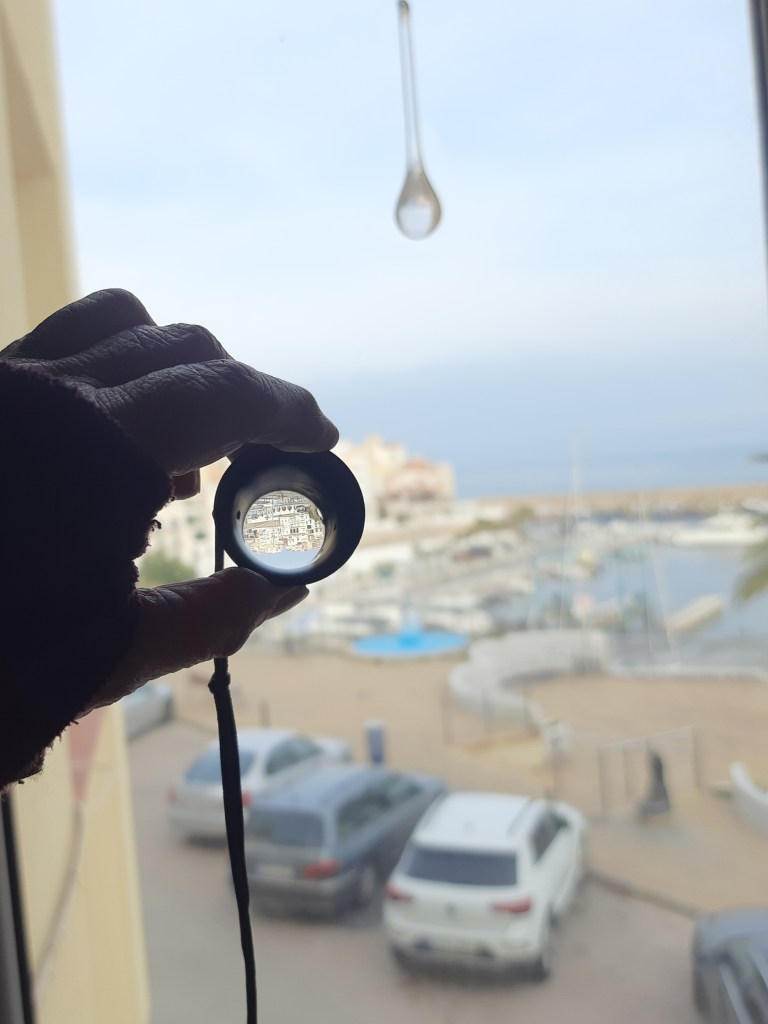
Rummaging through my drawer, a black cord keeps me from closing it. I tug on it, and tied to a carabiner hook covered in green rust, a black funnel-shaped object appears with a lens at its narrow end. Its Bakelite body is missing a small triangular chip where the lens screws in, and the lens itself is chipped too. “Darn it!” I hear my father say as he bends down to pick it up from the floor. It is his jeweler’s loupe, which he used to touch up tiny imperfections left by dust particles on photos using a fine brush dipped in black or white ink.

I remember a day during summer vacation. I had been given a microscope for my birthday. While running through my aunt’s garden, I scrapped my knee. I ran into the house, curious to look at my blood. It was teeming with round red particles that moved!

Better not look at the dust on my desk, just in case it moves too… I lift the loupe and try looking through it toward my window. I move it closer and farther from my eyes until the inverted, tiny image of my village appears. That is how it reduces. I flip it over. At two centimeters, it enlarges the minuscule print on an instruction manual. Closing one eye, I hold the loupe in the other. I can’t see a thing until the object is about ten centimeters away.

I look at my finger, magnificently magnified. I am amazed by the landscape of fingerprint ridges and grooves. Did you know that papillary ridges are dotted with countless tiny pitted specks? I get close to my dog’s blue eyes. Around the black pupil, I see feathery strokes of sky blue, encircled by a soft bluish-white ring laced with delicate veins.

I laugh quietly to myself. I have completely forgotten what I was looking for in the drawer. Standing here with my father’s loupe, I realize it doesn’t matter anymore. For a moment, I am not just looking through a lens; I am looking through my father’s eyes at a world full of wonders, sharing the exact curiosity that made him pause and pay attention to the tiniest details of life. Without knowing it, this was what I needed to find all along. 

Camino de Ronda

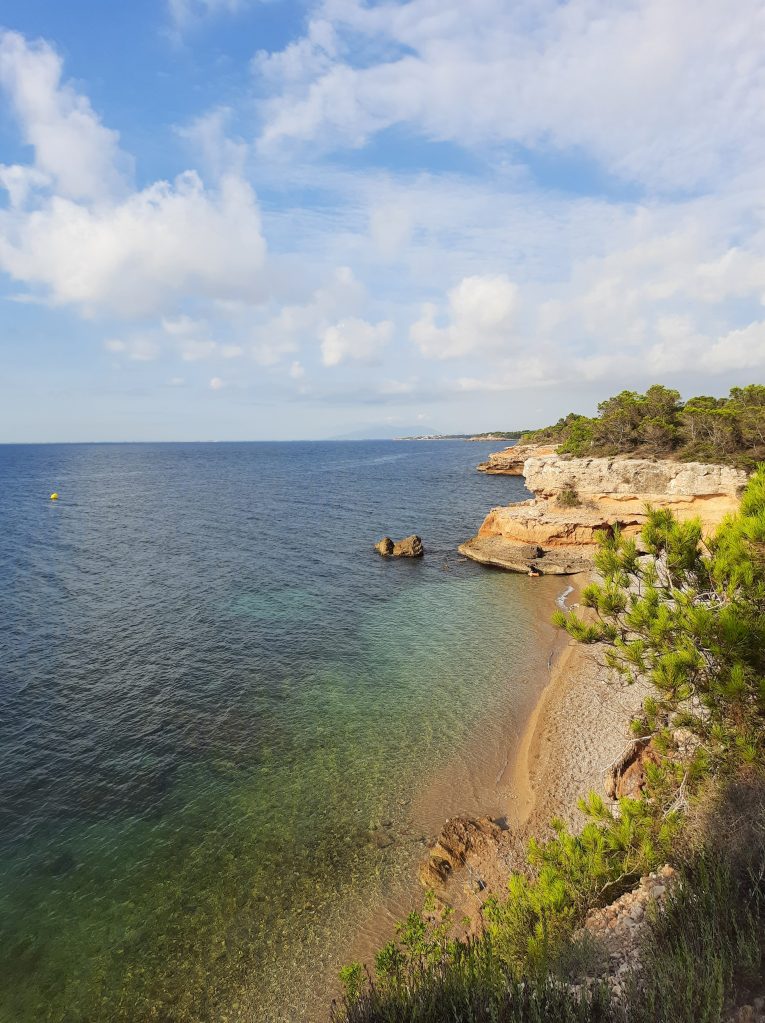
I walk with firm steps. I breathe deeply, absorbing the green exuberance as my feet tread on roots, fallen branches, and small pieces of calcified coral. In places, the ground is covered in soft green moss, slippery at times where cascading water has polished the surface. Downhill, downhill I go—carefully at first, but gaining speed until I am running. I feel the breeze of my own motion caressing my face.

This winding coastal path is my favorite section. My walk follows a map painted with scents: aromatic carpets of dry leaves, the perfume of pine, the fragrant offering of Mediterranean herbs, crisp green freshness, and the salty air from the Great Blue that embraces my town. I inhale deeply. Energy fills me. I feel calera.

The Sea is an Interior Monologue…

…and sometimes, my inner monologue is like the sea. In its calm blue, mysteries hide much like in the human psyche. They are difficult to wrest away. Sometimes they emerge on their own from the relentless ebb and flow. The sea is different every day. It is masculine and feminine. There are days when she looks like silver playing with the sun. When whipped by the wind, he grows angry, green as a cat’s eyes. I lose myself in the freedom of its infinite horizon. In the soothing murmur of its waves, I find a whole spectrum of ideas and thoughts, as deep as the sea itself. It speaks to me. Or is it I who speak to myself, stirred by it?

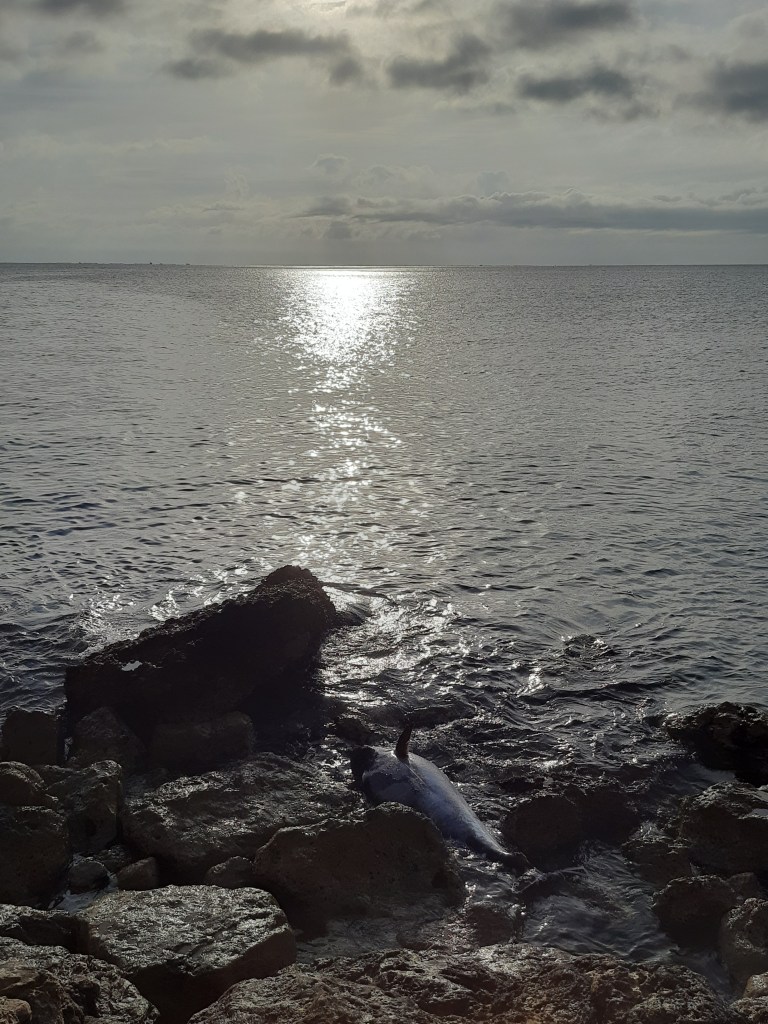
This morning, while walking my dog along the seashore, I found a tuna stranded among the rocks. I will never know what happened to it. I had often watched the large fishing boats hauling giant tuna from their deep bellies, lifted out of the fish farm enclosures. They transfer them to trucks that take them to the auction. Perhaps this one managed to escape its prison and died of hunger because, once free, it did not know how to feed itself. It was used to a daily diet of sardines, for which it sometimes fought with the other captive fish and the seagulls. Maybe it envied the seagulls their freedom of flight and decided to escape. Perhaps it injured itself during its getaway, which ultimately cost it its life. Or perhaps its time had simply come.

When this town cast a spell on me and I decided to stay, I had the impression it would be forever. This morning, I saw myself in the tuna’s place. We have both reached the end of the journey. It has died. I feel resurrected. Living by the sea is a present. And dying will be one, too.

Visions at Dawn

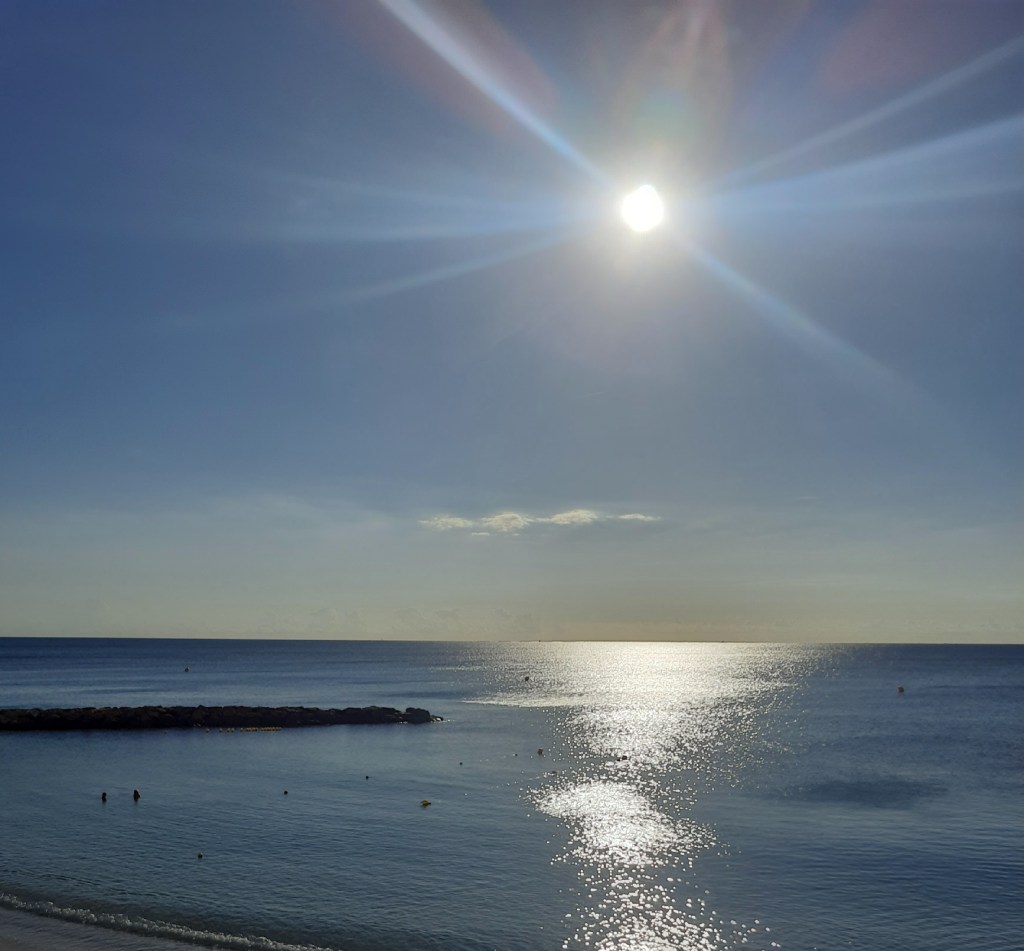
Come on, lazy bones, just get up! Go for a walk and enjoy the beauty of this new autumn day. In the dance of cool blue shadows, you can already sense winter drawing near. An aquamarine sky caresses its sapphire liquid lover, while in the distance, a lapis lazuli mountain range looks on, envying the beauty of their union. The blinding sun’s diamond reflections paint the palm fronds white. Let the still-mild air kiss the sleep from your eyes so you can witness the spectacle.

Because before you realize, darkness will descend. Like a black hole, the night will swallow the reddened dusk, wrapping you in the stillness of nothingness.

A few Loose Hours

A morning of strange Associatons

Strange associations

Last night‘s recordings sound as if I had been completely drunk. In reality, I had just been drunk on sleep.

This morning, however, waking up is a different story. My dog presses his face against mine and licks my nose—our sacred morning ritual. Inside my head, words are still fast asleep. “Coffee” is the very first one to clear the fog. I ask Alexa to turn on the news, needing to figure out what is happening in the world today. With a fresh mug and a yogurt in hand, I retreat straight back to bed.

On the radio, a reporter mentions that today is International Mother Language Day. The broadcast quickly shifts, making me wonder: is a new global conflict really looming over Europe? Then, the host introduces a word that describes me perfectly—tsundoku, the Japanese term for people who pile up unread books on their nightstands. Minutes later, a photo on Facebook catches my eye and lures me into the endless temptations of research.

But my drift is cut short. Wifi, my dog, urgently needs to pee and insists we get moving.

Outside, we cross paths with a couple wearing sunglasses. It is a windy, gray day; the sun is completely hidden. I can’t help but wonder: what exactly are they trying to hide?

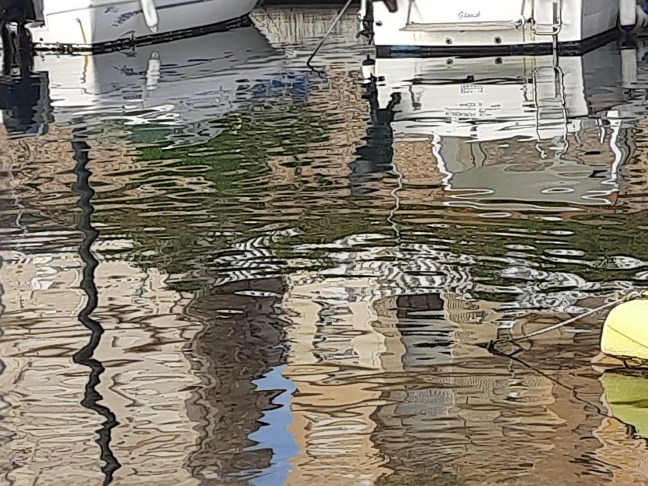
Down by the water, chaos breaks out as a flock of seagulls relentlessly pursues one lucky bird that managed to catch a sardine. Only a solitary cormorant remains completely still, as if lost in meditation. Looking down, I notice the reflection of a railing stretching across the water. The stark black-and-white lines instantly evoke the striped uniforms of prisoners in Nazi concentration camps. What a curious association for a simple morning walk.

Later, I go out for lunch with an English friend. As I play last night’s recordings for her—now translating my dictation to English—she can’t help but laugh out loud.

And looking back at my day, I have to chuckle too. It is fascinating how the mind works in those quiet, unstructured hours between sleep and fully waking up. From the simple, chaotic greed of seagulls to the heavy weight of history reflected in a harbor railing, our brains constantly weave together a unique tapestry of the world. Perhaps that is the beauty of language, or simply learning to translate our thoughts: it forces us to stop, look closer, and find meaning—or a good laugh—in the most fleeting moments.

A Visual Mind in a World of Words

Just Thinking

Today, I realized that it is far easier for me to think and write in a foreign language than it is to speak it. I can’t help but wonder why that is! As an exercise for today, I decide to dictate my thoughts directly into my phone. What a hassle! It feels clumsy and difficult, but I regard it as a creative challenge. So, practice it is!

Do I actually think in words? I don’t believe I do. My thoughts take shape long before the words arrive, and the specific language I choose depends entirely on whatever linguistic environment I happen to be immersed in at the moment.

Language is powerful. The Gospel of John famously begins with, “In the beginning was the Word,” casting the word as the ultimate creative force. On the other hand, Ulysses S. Grant once wrote, “I think I am a verb.” I deeply resonate with that observation. I am always active—a doer, a feeler, a creator of my own world. I am an active piece of the universe around me, or at the very least, my actions ripple through it.

I also think in images, a trait I consider quite important. Being the daughter of a photographer, this visual instinct is part of my DNA. As an artist, I spent a long time expressing my feelings, observations, and ideas through multidimensional, tactile visual works. Learning to describe both my inner and outer worlds through written language is an entirely new journey for me.