Le Provençal

A love story in a bottle.
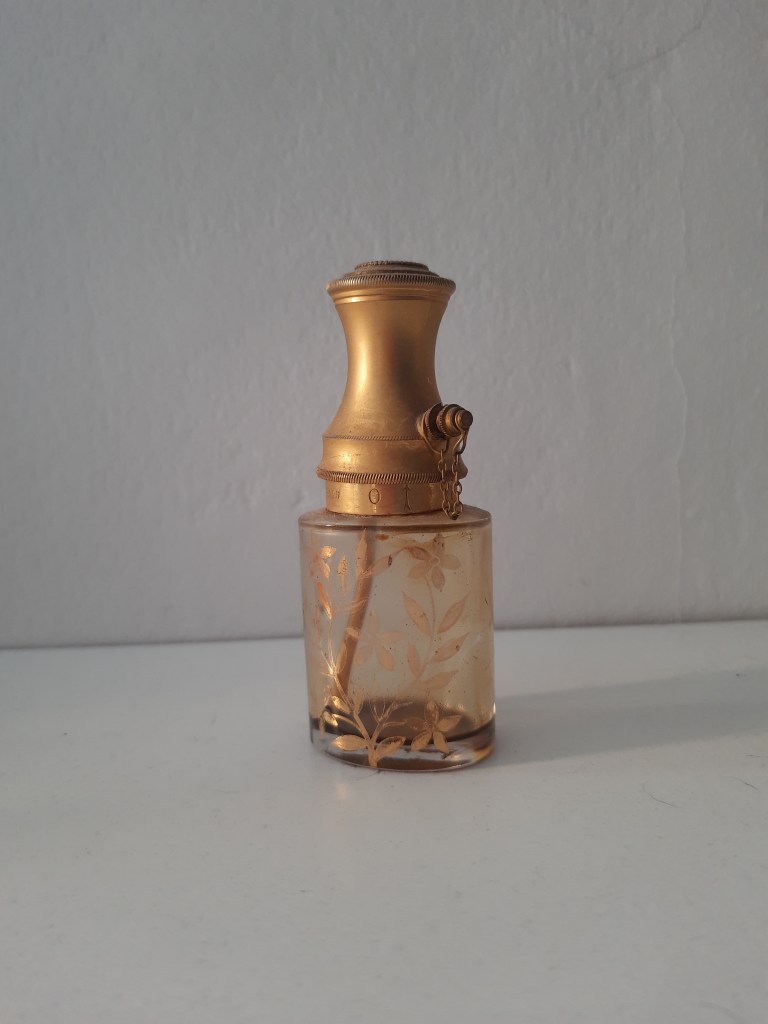
Vintage glass perfume bottle with gold floral decoration and ornate brass cap

“Your home is like a museum!” Gemma writes to me when I lend her my place for a while.

It’s true. Looking around at so many objects now, my apartment fills with a chorus of voices, each shouting over the other to tell its story—some long forgotten, others still vivid.

One soft, elegant voice stands apart. It draws me in precisely because it doesn’t scream like the rest. A small glass bottle, about four inches tall, catches my eye. It is hand-painted with golden leaves and flowers, topped with a brassy cap shaped like a fire hydrant. Instantly, I see my mother’s vanity table, where this tiny treasure rested from my childhood until her death in 2003.

Le Provençal – Molinard, reads the label on the cap, whose threads have been broken for years. I lift it. Like Aladdin’s genie, the perfume escapes from the dark brown residue clinging to the bottom of the bottle. Even after so many decades, it hasn’t lost its elegance or charm. My mother’s essence, I think.

No. 48 – Jeune – Grasse is printed near the base. Yes, she had been young back then, on those holidays in the South of France. Young and beautiful. I can see the lavender fields, the wild horses of the Camargue, the Roman ruins of Arles, and the bridge of Avignon. I hear my mother’s rich voice singing, “Sur le pont d’Avignon, on y danse…” and the buzz of the mosquitoes inside our tent—the ones that ate only my father and me alive. I see her eyes sparkling as she sampled the fragrances at the oldest perfume factory in France. And I remember her sheer delight when my father gave her that solid perfume sample set and this little bottle.

He loved her so very much.
Born of Frosty Soil

My grandmother´s tale

What a bitter irony! February 1950, and for the first time since the end of that terrible war, the whole family is gathered together—only for it to be at Father’s funeral.

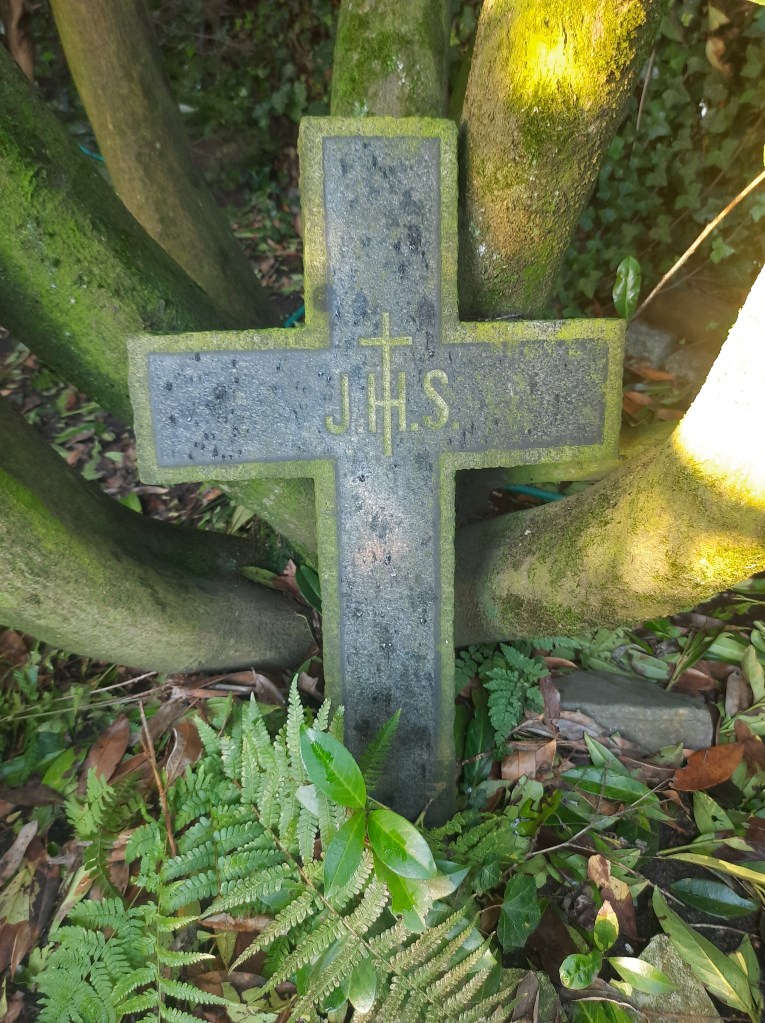
Weathered stone cross marked JHS among moss-covered tree roots and ferns

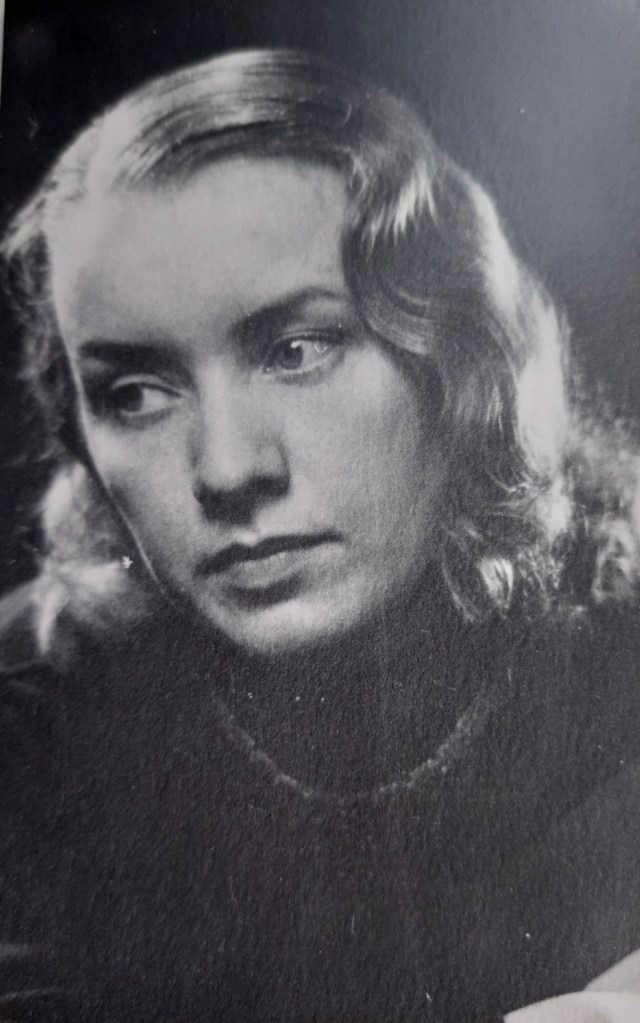
Through a veil of tears, I watch my daughter. Back straight, she steps slowly toward the open grave. Even now, when sorrow should mellow her frozen expression, not a single muscle twitches on her face of ice. Only the sharp, abrupt movement with which she hurls the white rose into the pit, and the tears streaming down her cheeks, betray the storm raging behind her composure. Her other hand rests over her swollen belly, cradling and shielding the child that will soon be born.

That gesture drags me back to the spring of 1917. I had run out of places to search for food. It broke my spirit to beg my family in the village for help.

“You considered yourself superior, choosing to abandon your backwater village for life in the rich city.” they threw in my face. “You should have stayed put. Too little, too late. Money can’t be eaten! Leave and don’t come back!”

Not a single rotten potato, nor a scrap of stale bread crust. I cried through the entire two-and-a-half-hour walk home, carrying a child nearly ready to enter the world. I wished for death right then and there. It is a miracle I didn’t miscarry on the shoulder of that road. I rested my freezing hands on my swollen belly. Still moving, I sighed, weary to my bones. Two months later Käthe arrived—a tiny, pale little worm without even the strength to cry. Another daughter. Another mouth to feed. My dry breasts had no milk to offer. The doctor wouldn’t even accept payment when, six months later, he diagnosed her with rickets.

Mourning her father

Yet how breathtaking that child, with her mismatched eyes, became! The caterpillar had transformed into a butterfly. Her sisters quickly learned she was as delicate as thin ice and handled her with care—their ice princess. And look at her now: proud, elegant, gorgeous – and as cold as the spring in which she was born.

Speed dating

1940

One day, I complained to my mother that I had no idea how to find a boyfriend.
“Don’t worry, darling,” she said. “One day, he’ll just knock on your door.”

Yeah, right, I thought and grimaced.

Seeing the doubt on my face, she decided to tell me how she met my father.

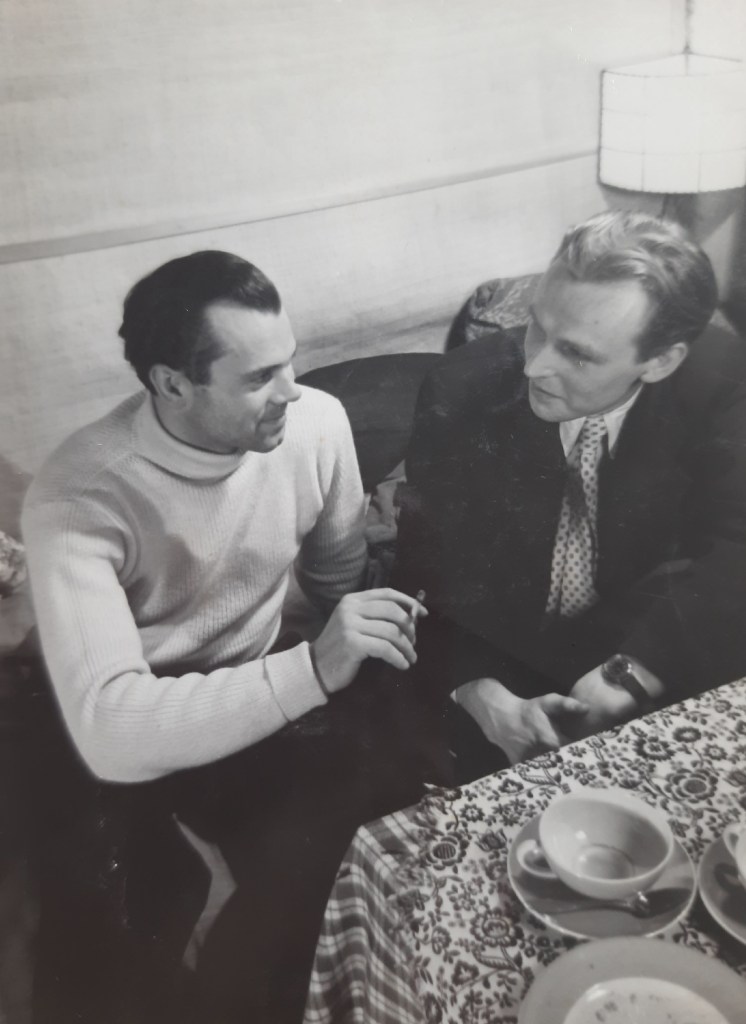
“It was the spring of 1939 in Berlin. I was sharing an apartment with my girlfriend Toni, who was studying textile design at university, and Ellen, a classmate of mine from fashion design school.That particular Saturday, it had poured with rain—typical April weather. On our way home, the three of us had been soaked to the bone. Now, a clothesline stretched across our living room, draped in a messy gallery of panties, bras, shirts, stockings, and dresses.Toni had just walked in and was in the bathroom washing her soiled clothes when the downstairs doorbell rang. I buzzed them in and listened to the heavy footsteps of two men climbing the stairs. It was eleven o’clock at night. Who on earth could that be at this hour? I wondered, checking to make sure the door’s safety chain was firmly in place. When they knocked on our door, I poked my head out, my hair wrapped in a towel after drying it. Standing there were two handsome young men—one in a trench coat and hat, the other in a leather jacket, both with their trousers drenched up to the knees. Small puddles were slowly forming around the tips of their closed umbrellas.

Black-and-white photograph of two men conversing at a dining table with teacups.
Koni and Fitz 1940

‘Does Miss Schneider live here?’ asked the tall blond one. ‘No, I’m sorry,’ I replied, preparing to shut the door. But then I noticed indignated that he had wedged his foot in the frame. ‘Could you please move your foot?’
‘Just a moment,’ said the one in the leather jacket. ‘I don’t understand. We just saw her come into this building, and she must have come up here, since this is the only apartment in the whole house with the lights on.’
‘That was my friend Lili Müller. Now please let me close the door and be on your way.’
‘What a shame. Our apologies, we must have made a mistake. We wanted to invite her and her friend out dancing. Would you ladies care to join us at the ballroom instead?’
‘No. It’s late, and the weather is terrible.’

The one in the leather jacket smiled at me.
‘How about tomorrow?’ He was handsome, I thought to myself. Why not? I caught sight of Lili peeking out from the bathroom door.
‘Lili, come here! These two guys are inviting us out dancing tomorrow. Do you feel like going?’
Lili looked at me, and I could see in her eyes that she loved the idea. And so, we made plans to go out the following evening with Koni and Fitz. Who would have guessed that a simple case of mistaken identity would end in two marriages, separated only by God many decades later?

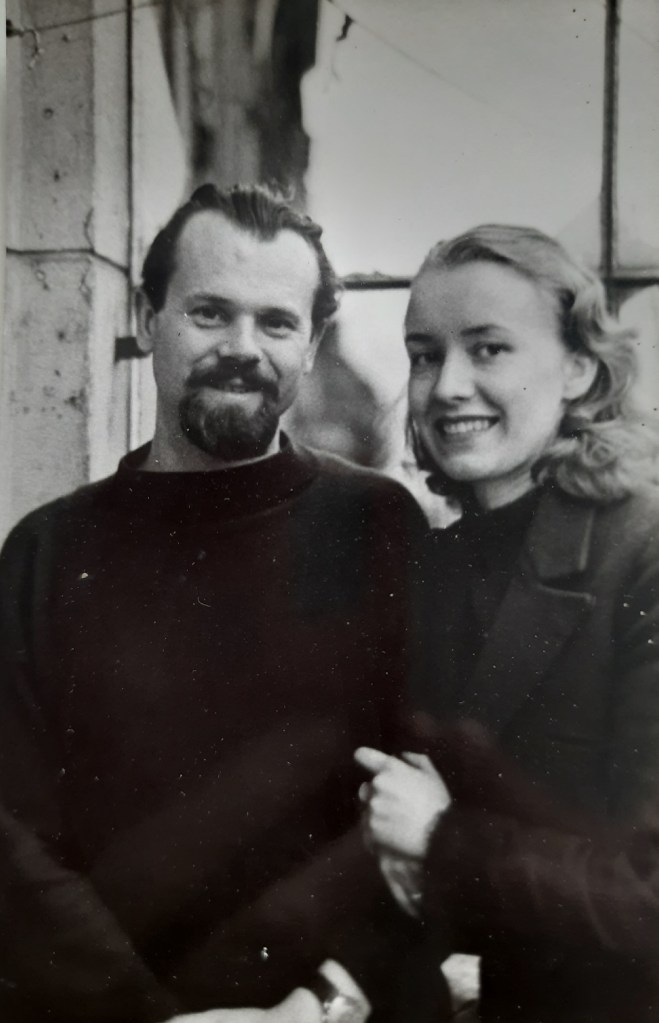
Black-and-white portrait of a smiling man and woman standing together indoors.
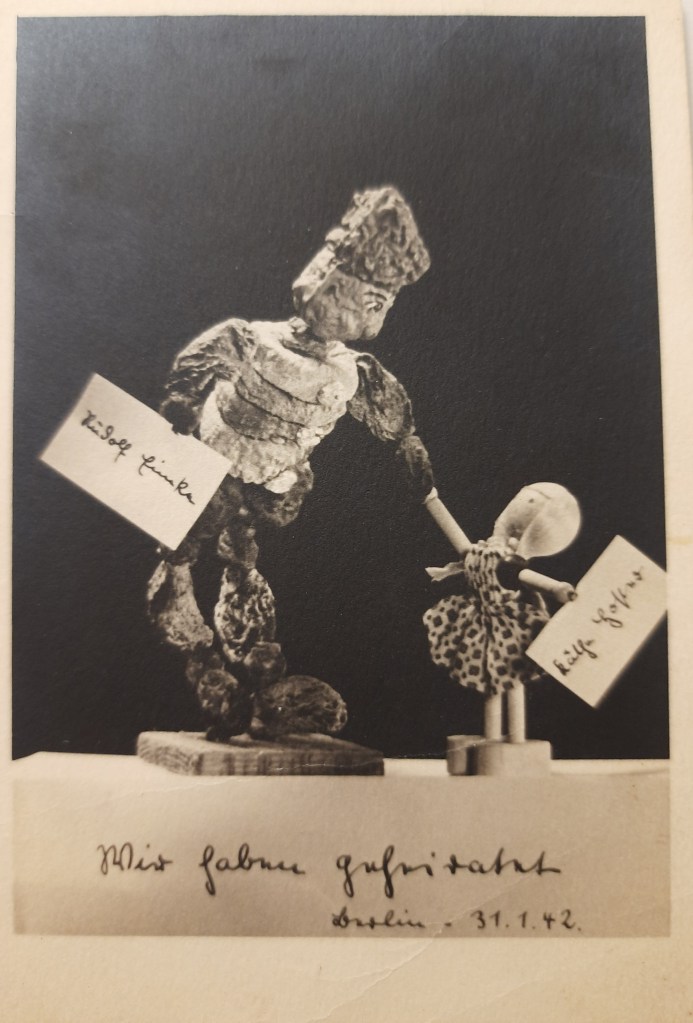
Katja und Koni at their wedding in Berlin 1942

Black-and-white photograph of a puppet performance featuring a costumed figure and a smaller seated figure with handwritten German labels.

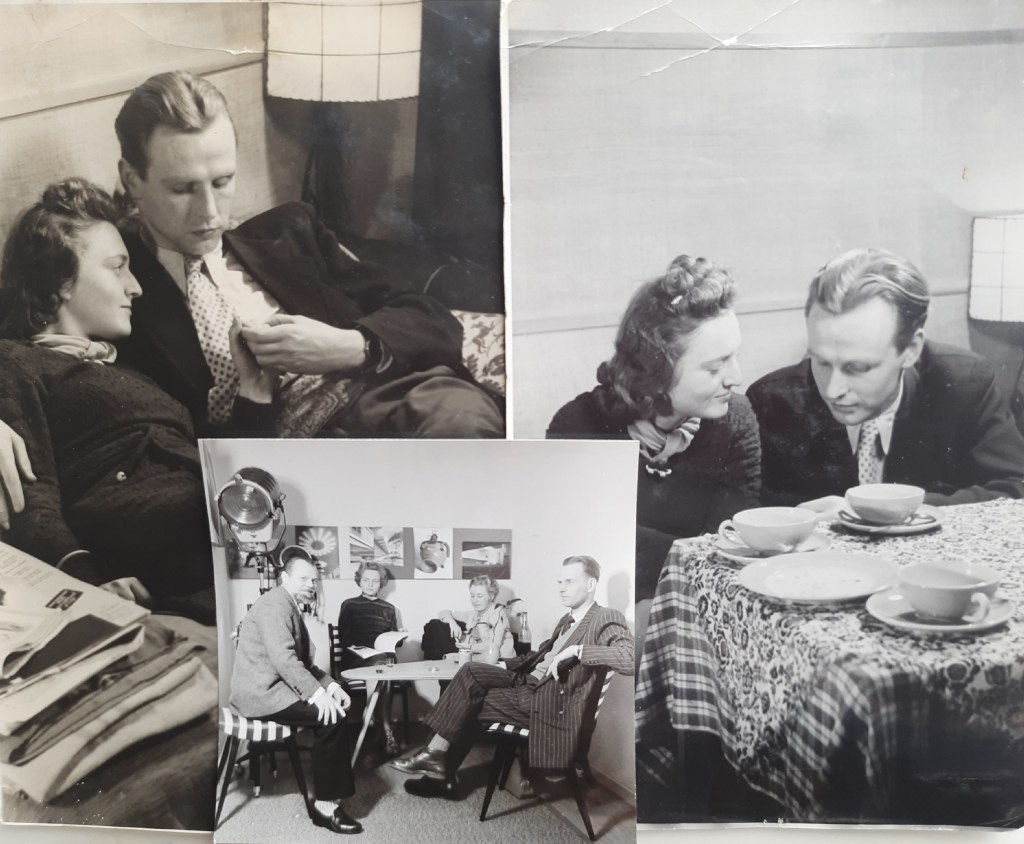
Collage of vintage black-and-white photographs showing a couple together and four people gathered around a table.
Lili and Fitz 1940 in Berlin and the two couples in the late 1950s at Koni’s Atelier in Düsseldorf

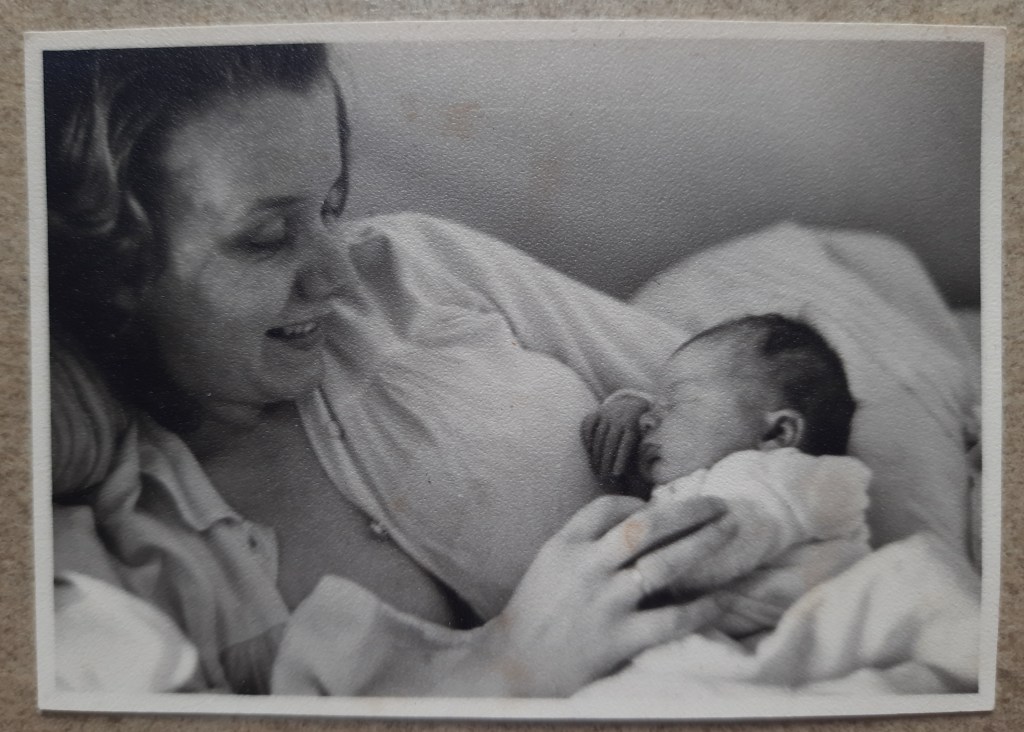
And eleven years after that night… you were born.”

Black-and-white photo of a mother smiling at her newborn baby in bed

Ellen

Forty-two Years of Friendship

The day before, I had taken a monumental step: moving out of my parents’ home and into a place of my own. Today was all about gratitude—a chance to host the friends who had helped me move and thank them with a home-cooked meal. There was just one problem. My new flat came with a gas stove, and no matter how much I fumbled with it, I couldn’t get it to light. As the clock ticked down, panic began to set in. Desperate, I decided to seek help next door.

Our fifth-floor apartment was split down the middle by a shared hallway that housed a shower on one side, a bathtub on the other, and a toilet nestled between them. On either side sat a separate kitchen and bedroom. The girl who used to live on the right side had recently moved out, leaving the remaining tenant to choose her new neighbor. She had chosen me.

I crossed the threshold and tapped softly on the frosted glass of her door. Moments later, a silhouette glided toward the glass. The door swung open, and there stood Ellen—completely, unapologetically naked.

I just froze there, eyes wide, utterly speechless. Ellen took one look at my stunned face and burst into laughter. “I don’t even have a gas stove—just two electric hot plates,” she chuckled. Taking me by the hand, she walked me back across the hall to my kitchen. Together, we finally coaxed a flame from the burner.

The food was still simmering on the stove as the first visitor rang the doorbell. That wild, unexpected afternoon encounter marked the beginning of a forty-two-year friendship—one that endured until the day God did us part.

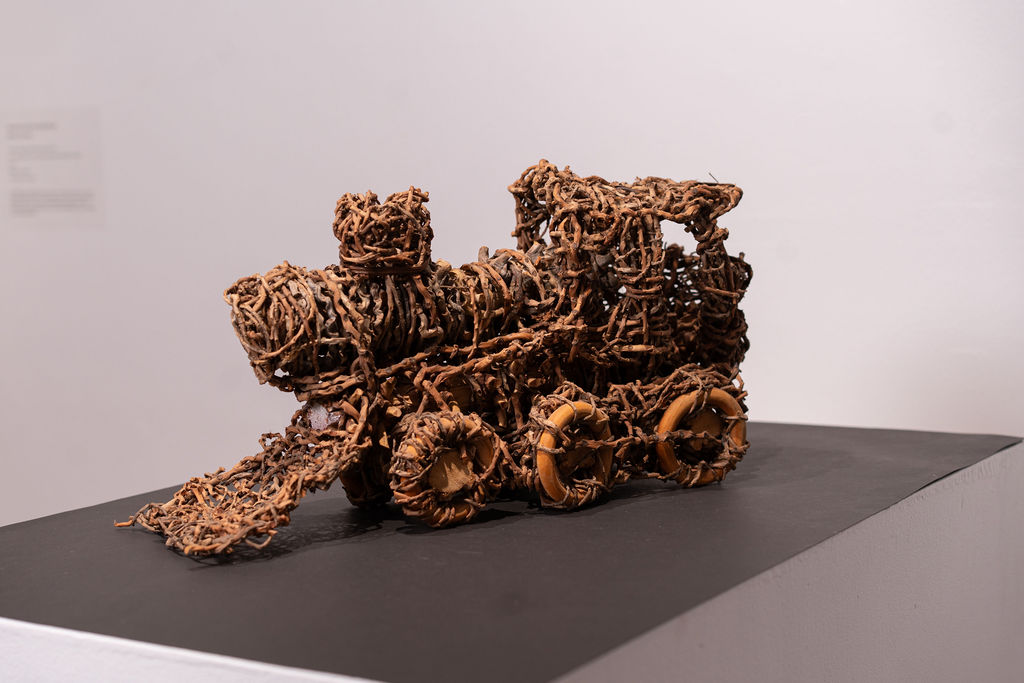
Janine McAullay-Bott, Train Engine, 2011, palm fronds, palm branch, kurrajong seed pod . Photo Josh Wells. Image supplied by MAC Inc.

Janine McAullay-Bott, Train Engine, 2011, palm fronds, palm branch, kurrajong seed pod . Photo Josh Wells. Image supplied by MAC Inc.

This morning, it felt as though her spirit were in the room with me. A photo popped up on my phone showing a tiny locomotive woven from twigs, and I knew instantly how much she would have adored it. She was an avid collector of toy trains and locomotives. Seeing it, I could almost picture her riding high atop that wooden train, her short hair tousled by the wind, laughing whole-heartedly—and, of course, stark naked.

I miss her dearly. She was the best friend I ever had.

The Pleasure of so many little Things

Tiny details of life in a world full of wonders

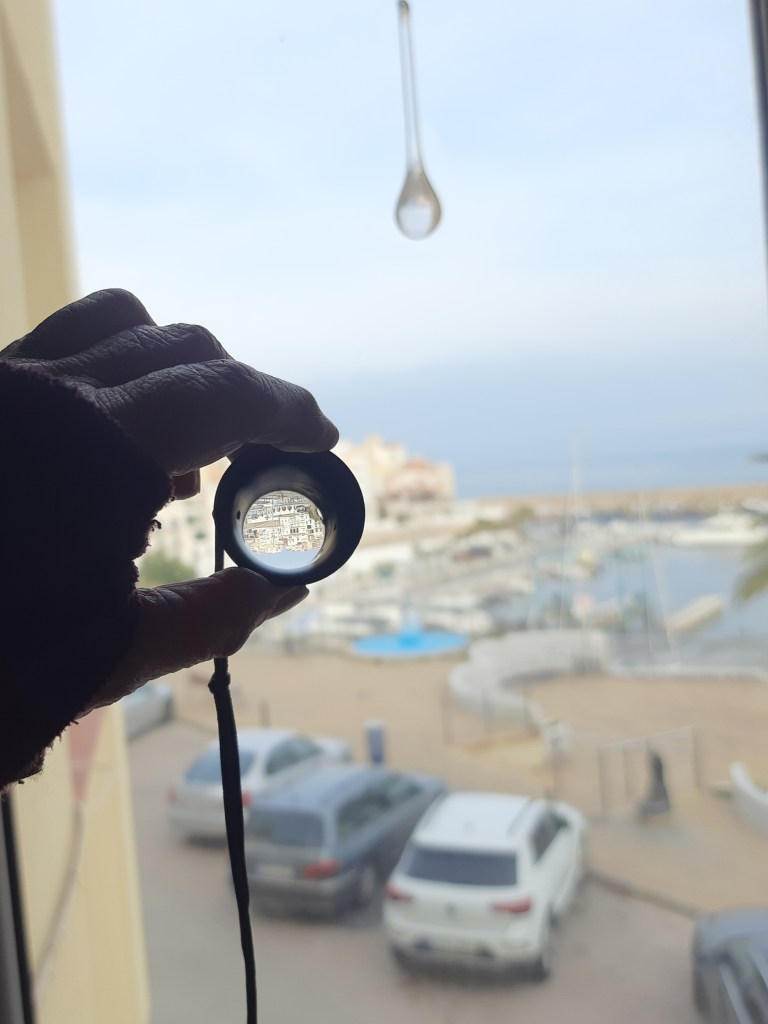
Rummaging through my drawer, a black cord keeps me from closing it. I tug on it, and tied to a carabiner hook covered in green rust, a black funnel-shaped object appears with a lens at its narrow end. Its Bakelite body is missing a small triangular chip where the lens screws in, and the lens itself is chipped too. “Darn it!” I hear my father say as he bends down to pick it up from the floor. It is his jeweler’s loupe, which he used to touch up tiny imperfections left by dust particles on photos using a fine brush dipped in black or white ink.

I remember a day during summer vacation. I had been given a microscope for my birthday. While running through my aunt’s garden, I scrapped my knee. I ran into the house, curious to look at my blood. It was teeming with round red particles that moved!

Better not look at the dust on my desk, just in case it moves too… I lift the loupe and try looking through it toward my window. I move it closer and farther from my eyes until the inverted, tiny image of my village appears. That is how it reduces. I flip it over. At two centimeters, it enlarges the minuscule print on an instruction manual. Closing one eye, I hold the loupe in the other. I can’t see a thing until the object is about ten centimeters away.

I look at my finger, magnificently magnified. I am amazed by the landscape of fingerprint ridges and grooves. Did you know that papillary ridges are dotted with countless tiny pitted specks? I get close to my dog’s blue eyes. Around the black pupil, I see feathery strokes of sky blue, encircled by a soft bluish-white ring laced with delicate veins.

I laugh quietly to myself. I have completely forgotten what I was looking for in the drawer. Standing here with my father’s loupe, I realize it doesn’t matter anymore. For a moment, I am not just looking through a lens; I am looking through my father’s eyes at a world full of wonders, sharing the exact curiosity that made him pause and pay attention to the tiniest details of life. Without knowing it, this was what I needed to find all along. 

A few Loose Hours

A morning of strange Associatons

Strange associations

Last night‘s recordings sound as if I had been completely drunk. In reality, I had just been drunk on sleep.

This morning, however, waking up is a different story. My dog presses his face against mine and licks my nose—our sacred morning ritual. Inside my head, words are still fast asleep. “Coffee” is the very first one to clear the fog. I ask Alexa to turn on the news, needing to figure out what is happening in the world today. With a fresh mug and a yogurt in hand, I retreat straight back to bed.

On the radio, a reporter mentions that today is International Mother Language Day. The broadcast quickly shifts, making me wonder: is a new global conflict really looming over Europe? Then, the host introduces a word that describes me perfectly—tsundoku, the Japanese term for people who pile up unread books on their nightstands. Minutes later, a photo on Facebook catches my eye and lures me into the endless temptations of research.

But my drift is cut short. Wifi, my dog, urgently needs to pee and insists we get moving.

Outside, we cross paths with a couple wearing sunglasses. It is a windy, gray day; the sun is completely hidden. I can’t help but wonder: what exactly are they trying to hide?

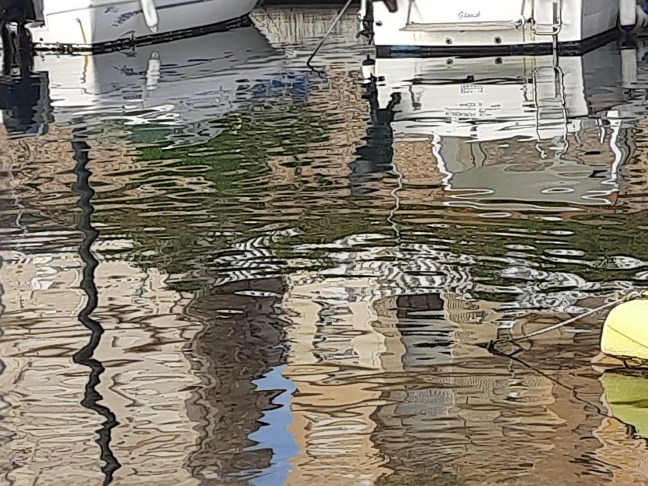
Down by the water, chaos breaks out as a flock of seagulls relentlessly pursues one lucky bird that managed to catch a sardine. Only a solitary cormorant remains completely still, as if lost in meditation. Looking down, I notice the reflection of a railing stretching across the water. The stark black-and-white lines instantly evoke the striped uniforms of prisoners in Nazi concentration camps. What a curious association for a simple morning walk.

Later, I go out for lunch with an English friend. As I play last night’s recordings for her—now translating my dictation to English—she can’t help but laugh out loud.

And looking back at my day, I have to chuckle too. It is fascinating how the mind works in those quiet, unstructured hours between sleep and fully waking up. From the simple, chaotic greed of seagulls to the heavy weight of history reflected in a harbor railing, our brains constantly weave together a unique tapestry of the world. Perhaps that is the beauty of language, or simply learning to translate our thoughts: it forces us to stop, look closer, and find meaning—or a good laugh—in the most fleeting moments.